Road Safety

Transforming connected vehicle data into real-time friction and road condition insights.

Mask Group 36-1

Upgrading accident statistics with predictive safety

Road safety has traditionally started with what already happened, focusing on accident statistics, crash reports, manual inspections, and assessments of road infrastructure. By the time a location appears in the data, the damage is done, and because accidents are rare, they only reveal part of the full risk picture.

Manual inspections are costly and infrequent, and historical accident data only shows where things have already gone wrong. This leaves road authorities and consultants making decisions based on incomplete information, struggling to prioritize budgets and measure whether safety improvements actually reduce the risk to road users.

NIRA changes that.

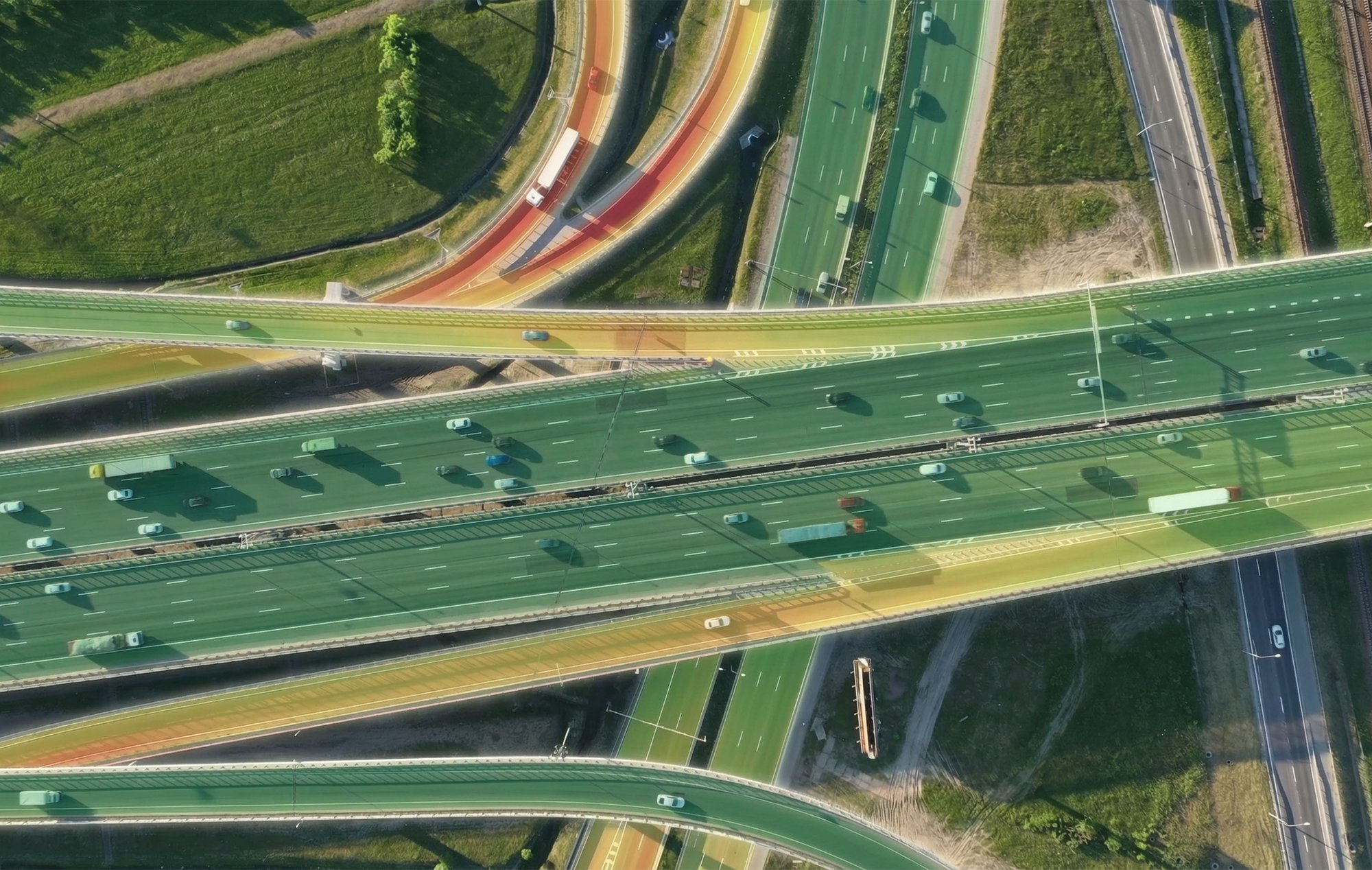
With real-time data from over two million connected vehicles, we transform real driving behavior, road conditions, and weather conditions, into continuous, network-wide risk intelligence helping you move from reactive accident analysis to proactive risk management, supporting your path to Vision Zero. Instead of relying solely on accident statistics, NIRA unlock predictive safety insights that reveal where risk is building, before accidents occur.

Instead of asking, “Where did accidents happen?”
You can ask, “Where are my road users at risk, and how can I keep them safe?”  

road-safety-2

Who benefits from NIRA Road Safety?

Whether you're conducting a national safety audit, planning a city-wide intervention, or investigating a single incident, NIRA's platform adapts to your workflow.

  • Road safety analysts – Network-wide risk scoring, near crash analysis, accident investigation support, and before–after verification.
  • Traffic planners – Prioritize interventions, strengthen planning cases, assess infrastructure impact, and profile intersection risk to prove measurable improvements in traffic safety.
  • Road authorities – Continuous network monitoring, strategic reporting, and data-driven budget and maintenance prioritization.

Upgrade your road safety analysis with connected vehicle data

Choose the level of aggregation that fits your workflow and road safety analysis.

roadsafety-overview

Available Road Safety data types

Friction demand: Measures how much friction drivers are actually using during braking, acceleration, and cornering, helping identify locations where driver friction demand approaches or exceeds available friction.

Friction supply: Estimates the maximum tire–road friction potential based on connected vehicle sensor data, reflecting real-world grip conditions across the network. 

Speed insights: Provides 25-meter resolution speed profiles across your network, revealing persistent speeding patterns and supporting evidence-based speed limit decisions.

Lane markings and signs: Detects deficiencies in road markings and traffic signage, helping identify areas where reduced visibility or unclear guidance may increase safety risk. 

Harsh braking: Delivers real-time data on sudden deceleration events (≥4.0 m/s²), enabling early identification of high-risk road segments before accidents occur. 

ABS events: Aggregates ABS activations per road segment, indicating potential low-friction conditions or sudden braking events, adding an additional safety signal to risk scoring and friction analysis.

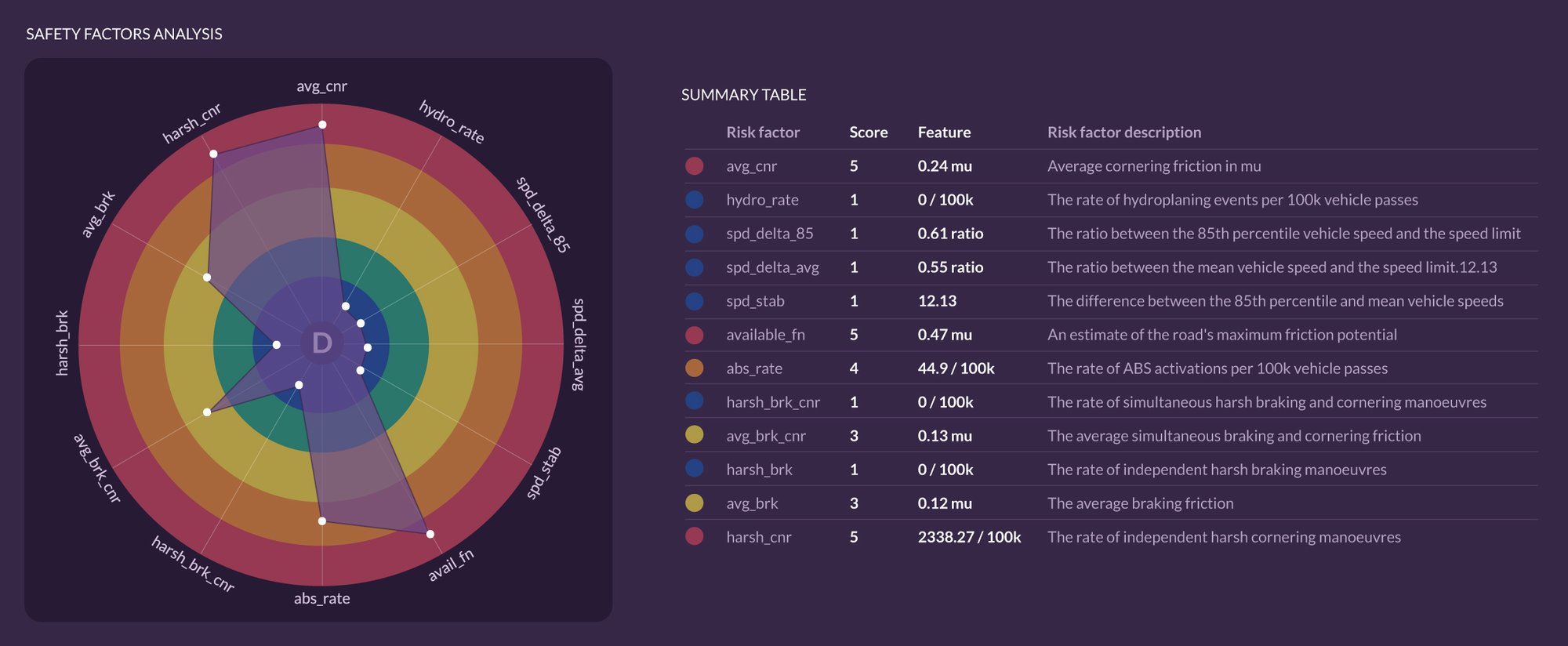
Manoeuvres analysis:  Captures and categorizes driving behaviour, including rates of harsh braking, harsh cornering, and friction demand during regular driving. A friction demand radial graph provides an at-a-glance view of behaviour patterns, helping identify road segments where dynamic vehicle forces indicate elevated safety risk. 

Hydro risks: Identifies locations prone to aquaplaning and standing water using real-time vehicle data, enabling rapid response and long-term drainage planning. 

harsh-braking-car

Network risk scoring: Identify danger zones before accidents happen

NIRA provides multiple high-resolution data layers, including friction, driving behaviour, vehicle dynamics, and environmental signals. Together, these insights give road safety analysts a foundation for understanding risk patterns across the road network and supporting data-driven safety decisions.

The data can be integrated into existing safety analysis tools, helping road authorities and consultants identify high-risk road segments and prioritize safety improvements before accidents occur.

roadsafety-spiderchart

(Conceptual image showing how connected vehicle data can be used to analyze road safety risk).

This location presents high levels of harsh cornering events, combined with a high average cornering friction.

Additionally, no harsh braking events were presented, but high levels of ABS activations, and low available friction indicate that motorists are attempting harsh braking manoeuvres, but are being prevented from carrying them out due to low available friction.  

road-safety-data

A practical workflow—from insight to impact:

  • Step 1: Analyze the network

    Connected vehicles continuously collect real-world road traffic safety data across your entire network, forming a dynamic foundation for predictive safety and risk scoring.

  • Step 2: Identify high-risk locations

    Pinpoint corridors, intersections, and segments with elevated risk levels compared with their peers. Filter by time period, behaviour patterns, or environmental conditions to prioritize where attention is needed most.  

  • Step 3: Understand the underlying risk factors

    Uncover what is driving elevated risk in each segment such as low friction, speeding patterns, hydroplaning risk, or behavioural instability. By revealing these underlying factors, NIRA provides the evidence base for targeted, data-driven interventions.  

  • Step 4: Verify impact

    Measure safety performance after implementation. Track changes in risk scores, near-crash frequency, and driver behaviour patterns across the same segments, ensuring every intervention delivers measurable improvement.  

Use cases: Where NIRA’s Road Safety data makes the difference

Instant road safety overview

Get an instant safety snapshot of your entire road network with dynamic risk scoring for road safety, beyond traditional accident statistics.

Quality assurance for established road safety practice

For organizations with established road safety practices, NIRA provides continuous verification and quality assurance of existing measures — strengthening your strategy with objective, data-driven insight and measurable progress toward Vision Zero.

Enhanced safety analysis for consultants and experts

Already aggregating multiple data sources? NIRA adds high-quality behavioural and vehicle dynamics data that enriches your models with real-world context, strengthening analysis, risk scoring for road safety, and improving predictive safety assessments.  

Contextual accident investigation support

Analyze time- and location-specific risk conditions using connected vehicle data. Assess for example friction levels, speed behaviour, and exposure patterns to complement accident statistics with deeper road traffic safety insight.  

Data-driven budget prioritization

Allocate resources where they reduce accidents the most. Use network-wide risk scoring and predictive safety insights to transparently prioritize investments across your road network.

Targeted alterations

Identify where infrastructure adjustments such as surface improvements, signage updates, or geometric refinements can significantly improve road traffic safety based on real-world driving behaviour.  

Why NIRA’s Road Safety data stands out

Our role goes beyond providing data. We operate across the full chain – from embedded vehicle software to fleet-wide data aggregation and the delivery of actionable road intelligence.
car_icons

Data producer
NIRA develops and operates its own in-vehicle software, enabling direct access to high-frequency vehicle signals. Data is verified end-to-end and built on software processing signals at 50–100 Hz, validated across more than 12,000 tire sets. 

Icon_road

Unique friction measurement
Measures the real friction between tires and the road surface based on experienced friction rather than artificial estimates. NIRA friction data provides near-continuous friction coefficients, capturing both low and high friction conditions. 

global icon

Large-scale connected vehicle network
Millions of connected vehicles, including fleets from partners such as the Volkswagen Group, provide broad coverage and continuous updates. 

data-signal-icon

Deep domain expertise
Advanced models interpret signals from road conditions, vehicle dynamics, and driver behaviour to reveal meaningful safety insights. 

NIRA Road Safety data is already live with:

Road-Safety-customers
Contact us

Learn how to harness the power of Road Safety