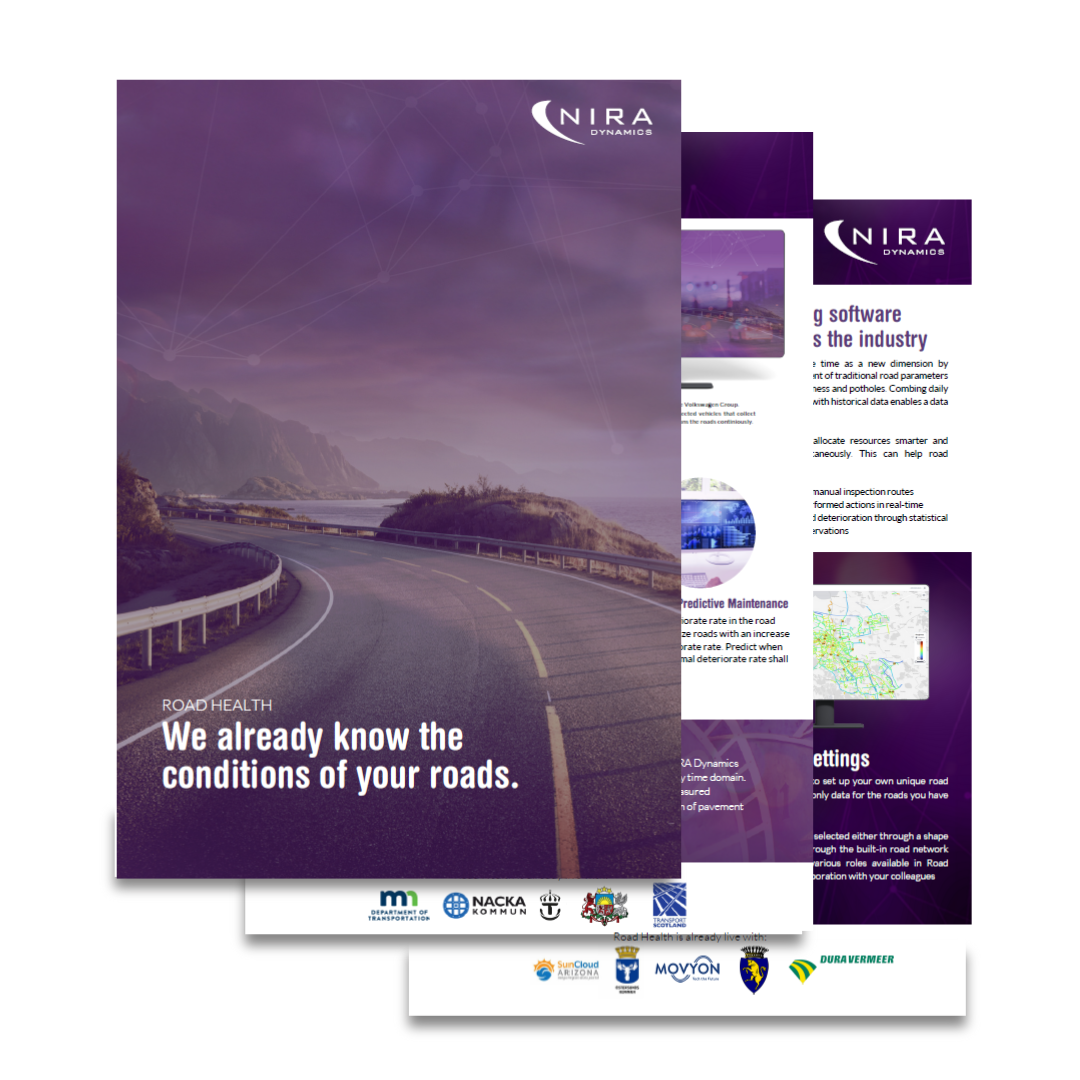
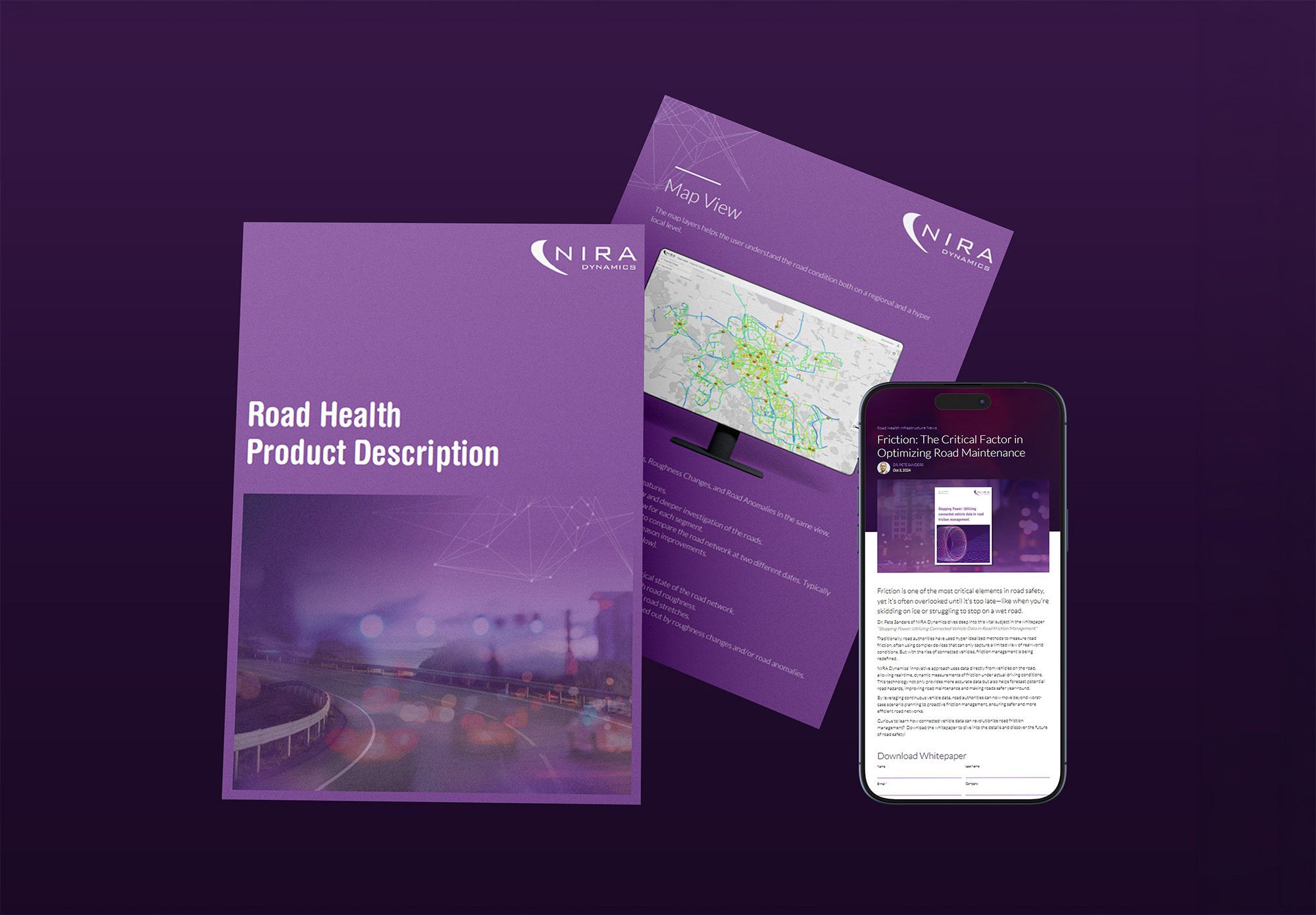
Upgrade your road maintenance with connected vehicles
Road maintenance has traditionally relied on periodic inspections, specialized measurement vehicles, and manual assessments. By the time issues are identified, deterioration has often progressed, resulting in reactive maintenance, higher costs, and inefficient use of resources. These methods are infrequent and limited in coverage, leaving decisions to be made on incomplete and outdated information.
That’s where Road Health by NIRA comes in.
Road Health supports both ordinary maintenance operations and long-term road asset planning. The solution can be used as a stand-alone service or integrated into existing inspection workflows, pavement management systems, and maintenance procedures.
With large-scale, high-frequency data collection from connected vehicles, Road Health provides a continuous view of road conditions across the network. Daily measurements enable earlier detection of deterioration and emerging defects, supporting faster response, improved safety, and more efficient maintenance operations.
Combined with historical data, Road Health enables forecasting and deterioration models tailored to the road network. This supports more accurate maintenance planning, better prioritization of investments, and preventive and predictive maintenance strategies that improve network reliability, durability, and cost efficiency.


Who benefits from Road Health?
Road Health transforms large-scale road condition data into actionable insights for decision-makers responsible for maintenance, asset performance, and cost-efficient road networks.
-
Road authorities – Strengthen asset management with objective, network-wide road condition data.
-
Road operators and contractors – Increase operational control and accountability through verified performance insights.
-
Municipalities – Improve road quality while maintaining predictable maintenance budgets.
-
Infrastructure and asset managers – Reduce lifecycle costs through measurable performance tracking and long-term condition insights.
Key capabilities of Road Health:
Road Health combines high-frequency connected vehicle data with long-term deterioration analysis to support both operational maintenance and strategic road asset planning at lane level. The solution enables automated alerts linked to detected deterioration, including potholes and bridge joint degradation, while historical data collected since October 2021 supports tailored deterioration and forecasting models accounting for traffic volume, weather conditions, and observed pavement behaviour over time.
Daily operations
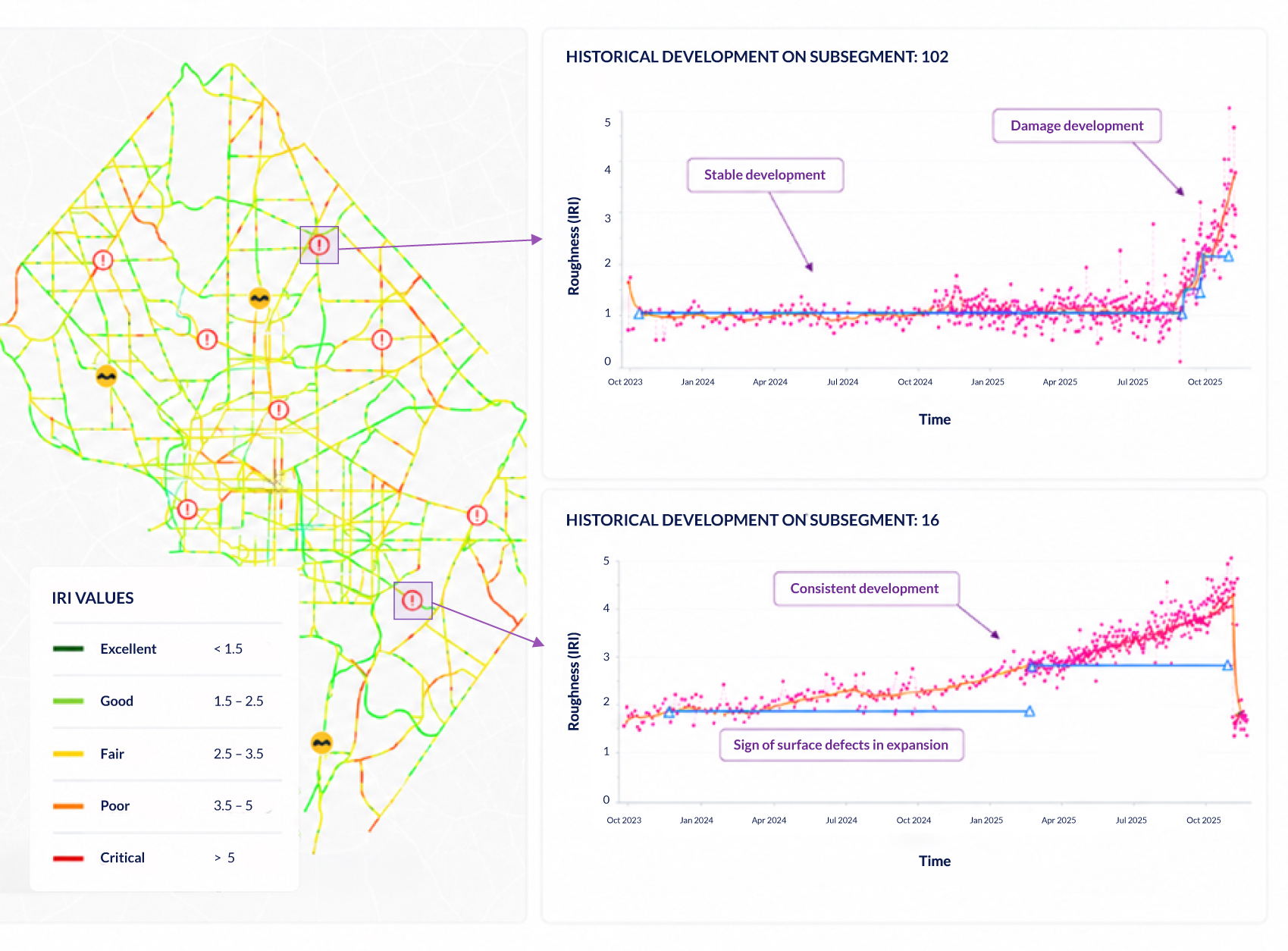
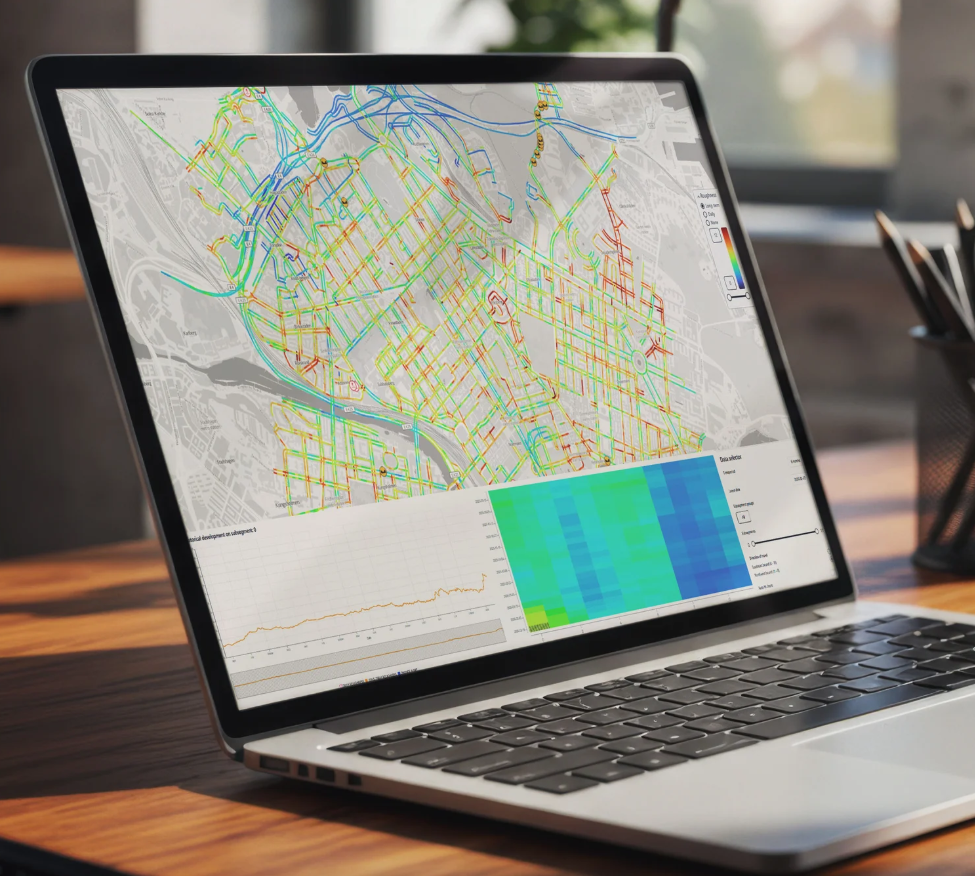
NIRA delivers a continuously updated view of the road network based on vehicle sensor data collected during normal traffic. Changes in road condition, including increasing roughness, potholes, and other surface anomalies, are automatically detected, visualized across the network, and flagged through alerts as they occur.
This enables daily monitoring and rapid identification of deterioration.
With a fleet-based approach, you gain an always up-to-date picture of the network, supporting transparent dialogue with contractors, stakeholders, and the public, and enabling more targeted visual inspections.

-
Network-wide lane-level monitoring of road roughness (IRI) and surface anomalies with daily updates and alerts.
-
Point-specific monitoring of critical infrastructure elements such as bridge joints and recurring defect locations.
-
Automated detection and notification of condition changes and accelerated deterioration, including potholes, obstacles, and speed bumps.
-
Objective and continuously updated data supporting contractor management, maintenance verification, and stakeholder communication.
-
Follow-up and evaluation of completed maintenance actions based on measured road performance over time.
-
Trend analysis and forecasting of road deterioration using historical measurements and road-specific predictive models.
Long-term planning
Road Health supports long-term road asset planning by analyzing how road conditions develop across the network. By combining historical data with continuously collected measurements, it provides a clear understanding of deterioration rates over time.
This enables you to prioritize the right roads at the right time, whether identifying sections with accelerating deterioration, monitoring repair performance, or predicting when maintenance will be required, supporting preventive and predictive maintenance strategies.
With road-specific deterioration models accounting for climate conditions, traffic volume, and pavement characteristics, Road Health supports more accurate forecasting of future road development and maintenance needs. This allows different models to be applied within the same network depending on pavement type, such as asphalt, concrete, or cobblestone roads.
With data-driven insights grounded in measured road performance, decisions become more accurate, transparent, and cost-efficient, supporting safer and more reliable road networks.
-
Use IRI and relative trends to guide and define project level investigation.
-
Monitor the durability and performance of repairs over time.
-
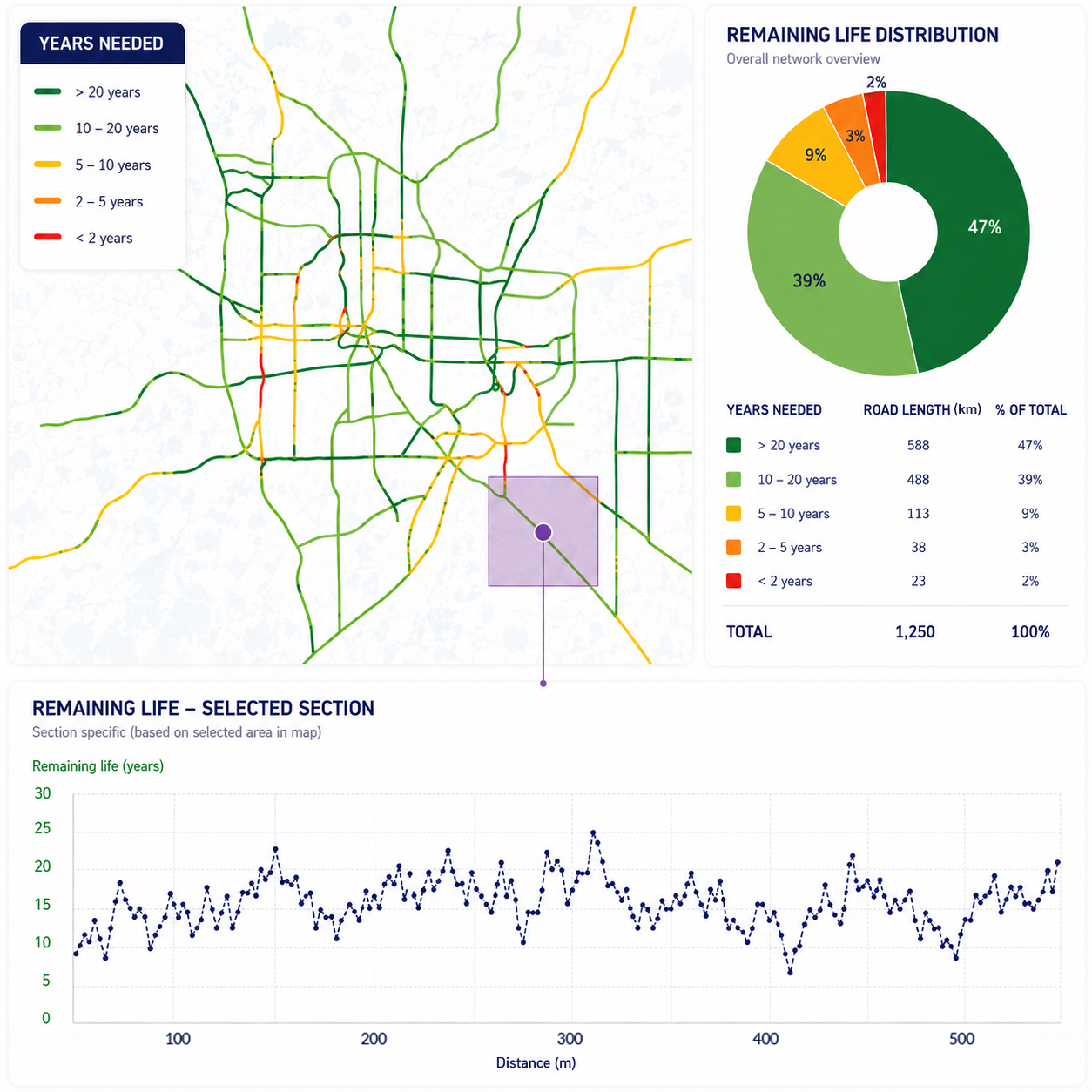
Estimate remaining pavement life.
-
Predict when maintenance is required for roads with normal deterioration rates.
-
Track long-term performance trends across the network.
-
Support efficient resource allocation based on measured road condition data, enabling more cost-effective and reliable network management.

The components of Road Health are:
Daily updates provide an always up-to-date road network status. Compare current conditions over time or across sub-networks to track development.
Receive alerts on potholes and changes in roughness as they occur. Focus on inspections and actions where they are needed most, based on real-time changes in the network.
Use high-frequency data to identify trends in your road network. Analyze deterioration rates, seasonal variations, and performance patterns to support more accurate maintenance prioritization.
Use tailored models capable of estimating the residual life of a given pavement structure and projecting its development over 5 and 10 years.
A practical workflow—from insight to impact:

-
Step 1: Analyze the network: Connected vehicles continuously collect real-world road condition data across your entire network, creating a high-frequency, network-wide foundation for monitoring road condition.
-
Step 2: Identify critical sections : Detect road segments, corridors, and bridge joints where conditions deviate from expected performance using customized performance indicators.
-
Step 3: Data driven inspections: Support your daily operations with updated sections scheme to inspect for establishing the solution to implement.
- Step 4: Implement maintenance and management strategy: Combine Road Health Data with field inspection findings to define and implement maintenance strategies based on measured road development, identified root causes, and forecasted future deterioration scenarios.
-
Step 5: Verify impact: Monitor how road conditions evolve after maintenance or interventions. Measure changes in road condition across the same segments to ensure each intervention delivers measurable improvement.
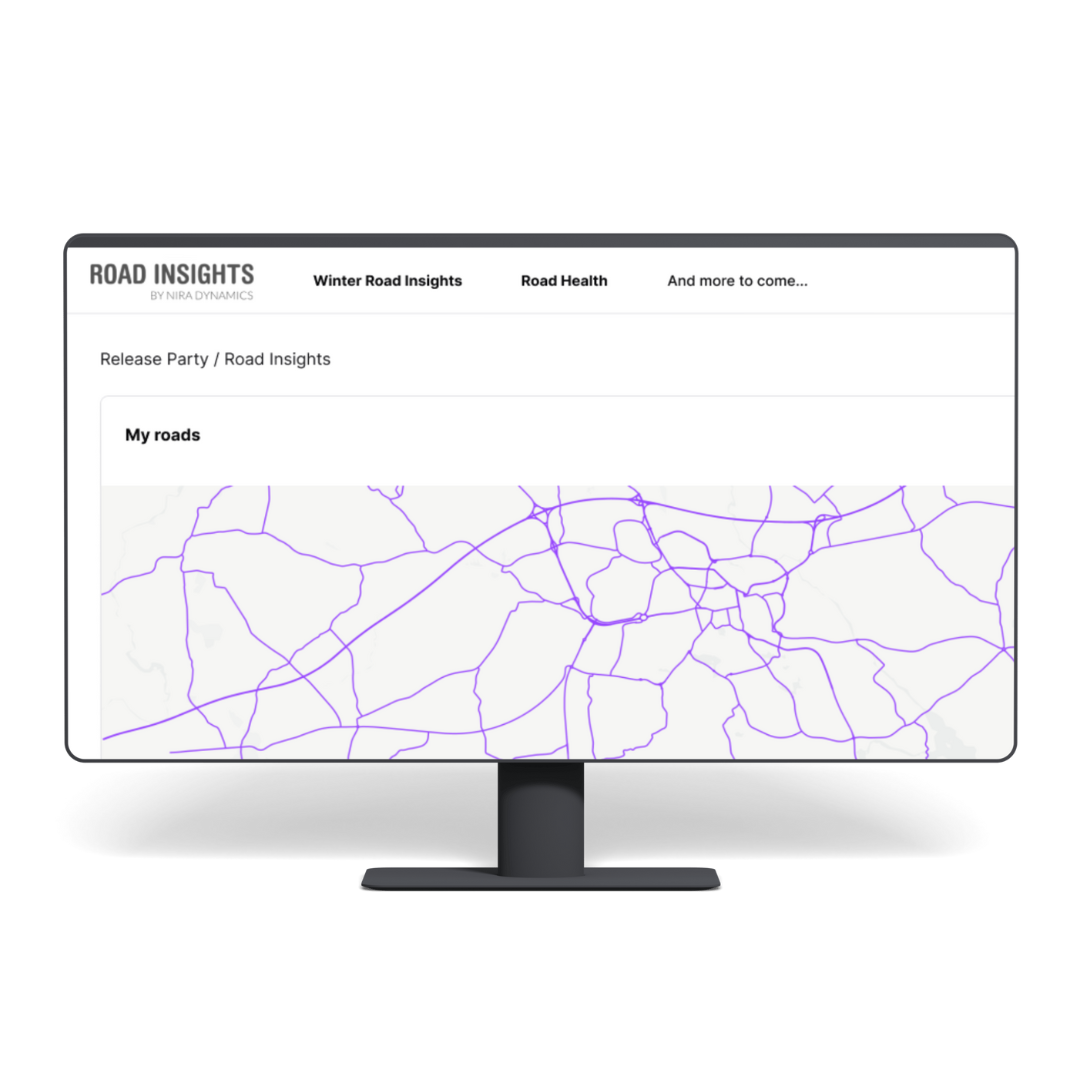
Road Insights - a powerful tool for gathering actionable insights of your road network
Use cases: When Road Health makes the difference:
✅ Daily network monitoring and operational awareness
Gain continuously updated insight into road roughness, anomalies, and condition changes across the network. Support daily maintenance operations with objective data enabling faster identification of deteriorating sections and more targeted inspections.
✅ Data-driven maintenance planning and forecasting
Use historical and continuously collected measurements to understand deterioration trends, prioritize interventions, and forecast future road development. Road-specific predictive models accounting for pavement type, climate conditions, and traffic volume support preventive and predictive maintenance strategies.
✅ Early detection of localized deterioration
Detect potholes, accelerated deterioration, and abnormal condition changes through automated alerts and trend analysis. Monitor critical infrastructure elements such as bridge joints and recurring defect locations to reduce reaction time and improve road safety.
✅ Performance verification and resource optimization
Measure how road conditions evolve after maintenance actions to verify repair performance over time. Reduce unnecessary inspections, improve contractor follow-up, and allocate maintenance resources more efficiently using continuously measured road performance data.
Download sample data

How to Access NIRA’s Data
Custom analytics: Work with our pavement engineering experts to turn data into tailored insights.
Via API integration: Seamlessly integrate our data into your own systems using our robust APIs. Access insights where and when you need them.
Through Road Insights: Access our user-friendly tool, Road Insights, designed to provide actionable insights and simplify road maintenance planning.
With Our Partners' Pavement Management Systems: Utilize our data through some of the best pavement management solutions on the market, provided by our trusted partners.
Road Health - In less than a minute

Deep dive into our additional resources on road maintenance
Q&A
Frequently Asked Questions about Road Health:
What is Road Health by NIRA and how does it work?
Road Health uses data from connected vehicles in everyday traffic to continuously monitor road conditions across the network. High-frequency vehicle measurements are used to detect changes in roughness, potholes, and other surface irregularities, enabling both daily operational monitoring and long-term deterioration analysis.
How is Road Health different from traditional road inspections?
Traditional methods rely on periodic inspections and specialized vehicles, providing limited coverage of the network. Road Health enables continuous monitoring, giving you up-to-date insights and allowing you to detect changes in road conditions as they happen.
How accurate is the data from connected vehicles?
Because data is collected from regular passenger vehicles, it reflects how road conditions are actually experienced in real traffic. This provides a consistent, representative, and scalable view of road quality across the network.
What types of road conditions can be detected using Road Health?
Road Health detects changes in road roughness (IRI), surface irregularities, and localized anomalies such as potholes, obstacles, and bridge joint deterioration. The solution also identifies accelerated deterioration trends and sudden condition changes across the network.
Can Road Health help reduce maintenance costs?
Yes. By enabling earlier detection of deterioration and supporting data-driven maintenance planning, Road Health helps road authorities and operators prioritize interventions more effectively, reduce unnecessary inspections, and allocate maintenance resources more efficiently.
How does Road Health support maintenance planning?
Road Health combines continuously collected measurements with historical trend analysis to support both operational maintenance and long-term road asset planning. Historical data enables forecasting models accounting for traffic volume, climate conditions, and pavement characteristics, supporting preventive and predictive maintenance strategies.
Is it possible to track the impact of completed maintenance?
Yes. Road Health allows you to monitor how road conditions evolve after interventions. This makes it possible to verify results, compare performance over time, and ensure that maintenance actions deliver measurable improvements.
How is the data accessed and used?
Road Health is already live with: