The world-leading tire pressure monitoring system.
Tire Pressure Indicator, TPI by NIRA, is the world’s most advanced indirect tire pressure monitoring system. With it, the driver is alerted if any of the tires is underinflated – long before the tire breaks down. This improves safety, of course, but that’s really only the beginning. As tire wear and fuel consumption are reduced when tires are correctly inflated, it also improves economy. And decreases the environmental impact.
Over 100 million Tire Pressure Indicator units sold
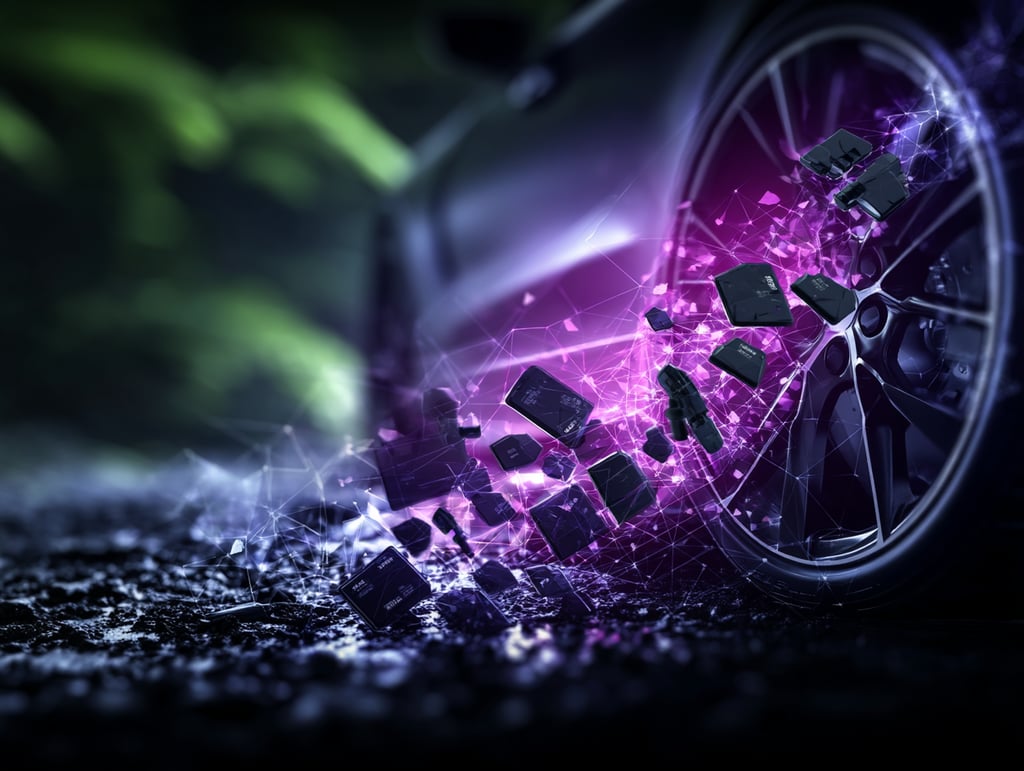
More than 100 million vehicles are using Tire Pressure Indicator, our TPMS technology, marking a significant leap towards sustainability in the automotive industry. By replacing traditional hardware sensors with our software solution, we've not only enhanced vehicle safety and performance but also made a substantial impact on the environment. This shift has saved an estimated 40 000 tons of electronic waste – equivalent to the weight of several Eiffel Towers!
A smarter software for future cars
75% of failing tires are caused by or slow leakage, and tire problems are the third most common reason for passenger vehicle breakdowns. With every 0.2 bar the tire is underinflated, fuel consumption increases 1.5% and the life span of a tire decreases 15%. Approximately 20% of all passenger cars have tires which are underinflated by up to 40%.
TPI by NIRA is a software solution which determines the tire inflation pressure from the wheel speed signals. That means it does not require any in-wheel pressure sensors and RF components. Which, of course, makes it very cost-effective. Thanks to its AUTOSAR compliant interface, TPI can also be quickly and easily integrated with various systems running on different hardware. Moreover, it fulfills all current TPMS legislations worldwide, including ECE-R64 and FMVSS138.
Please visit our companion site, itpmsadvantage.com, for more information regarding sensorless TPMSs.
Key facts about Tire Pressure Indicator by NIRA:
The number one iTPMS on the market – over 100 million units in production.
Complies to all TPMS legislations worldwide with only two variants – one for R141 and one for FMVSS138/GB26149- 2017 Cat.II.
Autosar-compliant, easy to integrate - default in ESC, in other ECUs possible.
Many reference ESC series integrations with Bosch, ZF and Conti.
No hardware – minimum complexity throughout the whole chain from development to dealership/workshop.
Intelligent detection and clear driver guidance
TPI is capable of detecting pressure drops in one, two, three, or even up to all four tires, and it can also isolate which tires, exactly, are underinflated. The system is robust against surface changes, load variations and driving styles, and it automatically adjusts to different types of tires.
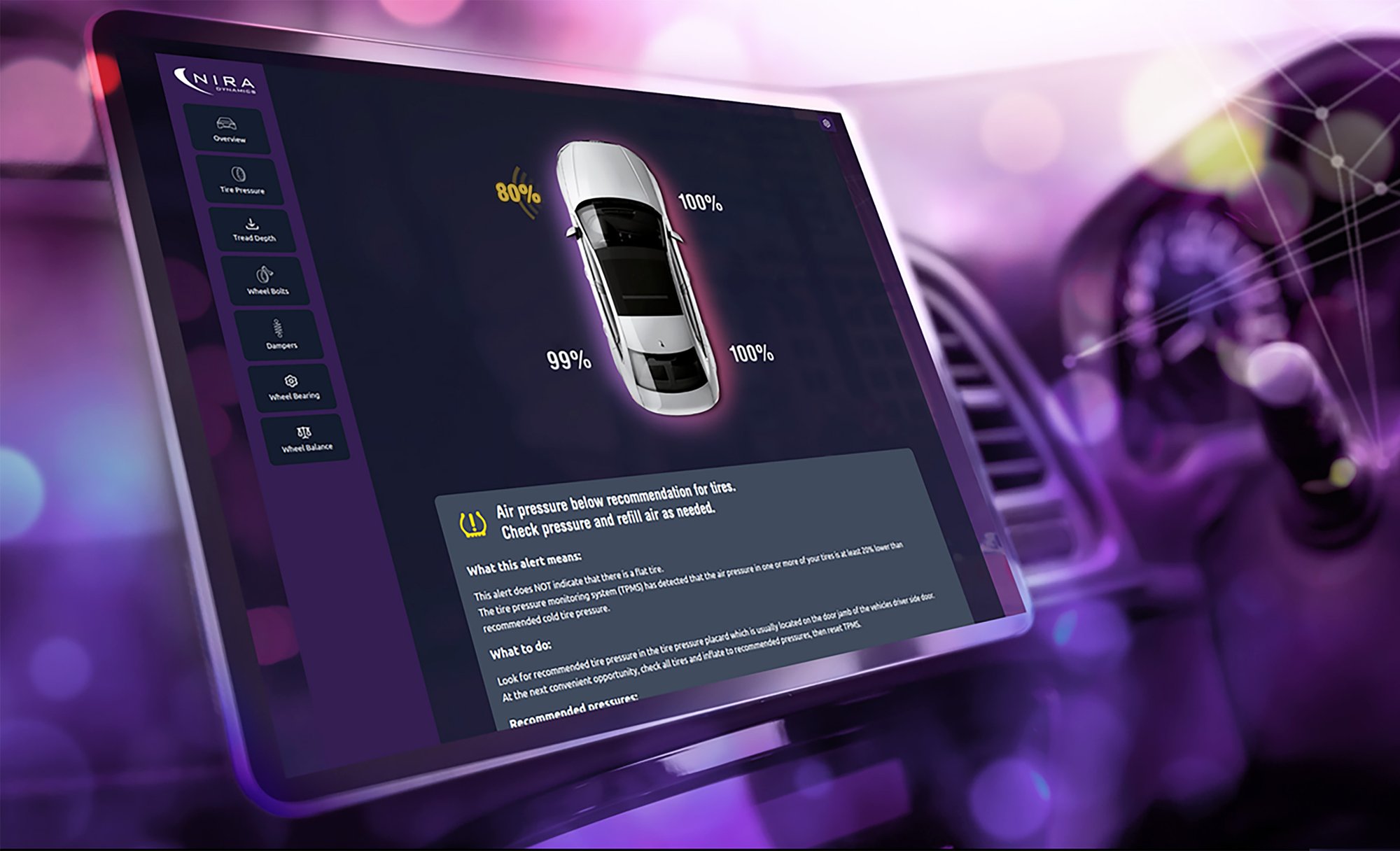
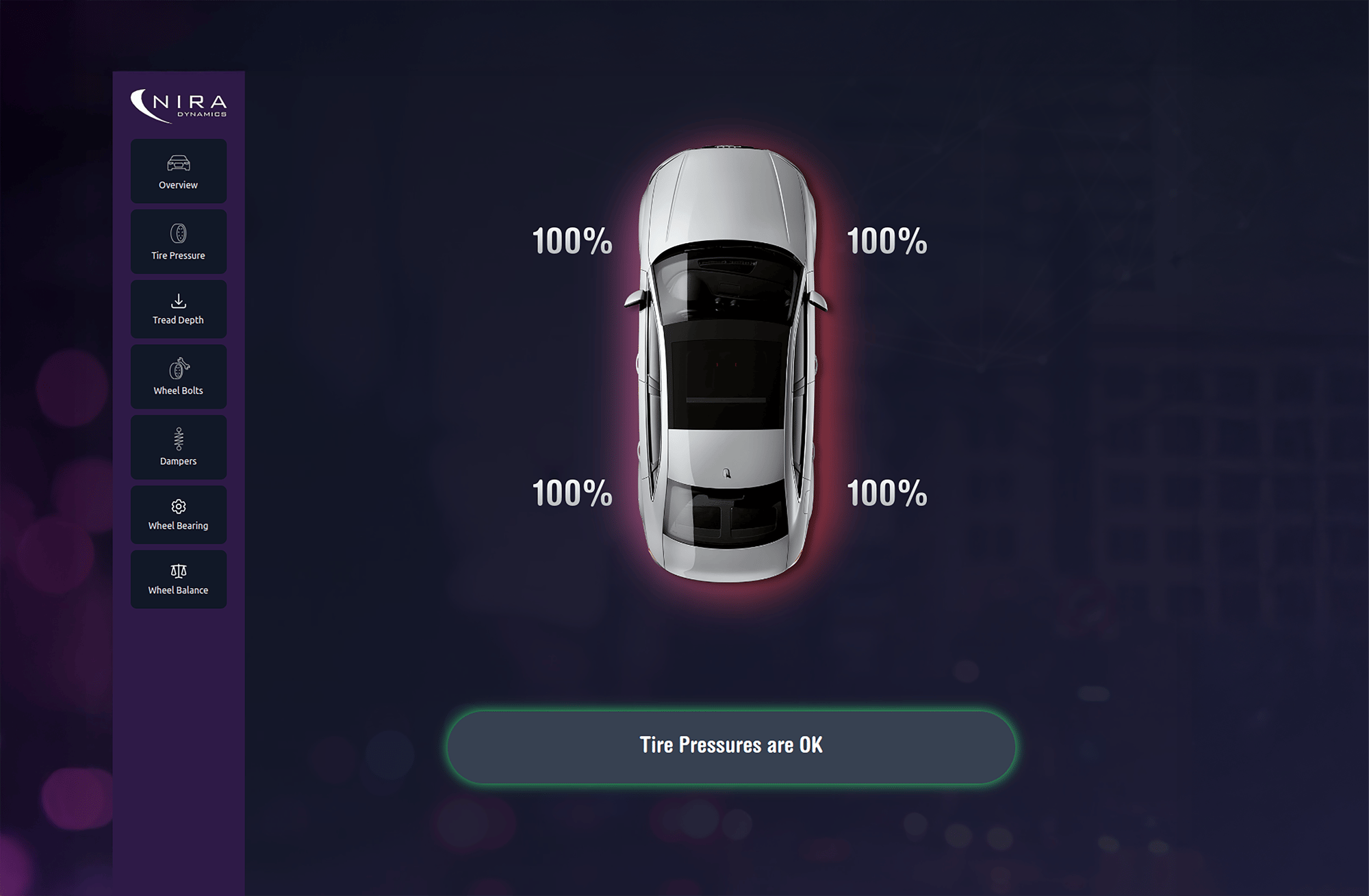
With the introduction of TPI UX we are offering enhanced detection performance and improved graphical interface for increased safety and performance. By utilizing the percentage display, drivers are always well-informed, resulting in fuel savings and increased tire lifespan.
Optimize tire pressure for increased efficiency
The percentage display provides drivers with detailed insights into tire pressure levels, making it possible to check the pressure while driving. This functionality is a significant step forward in usability and delivers a similar experience to direct TPMS systems with absolute pressure displays.
Critical tire puncture warning and detection
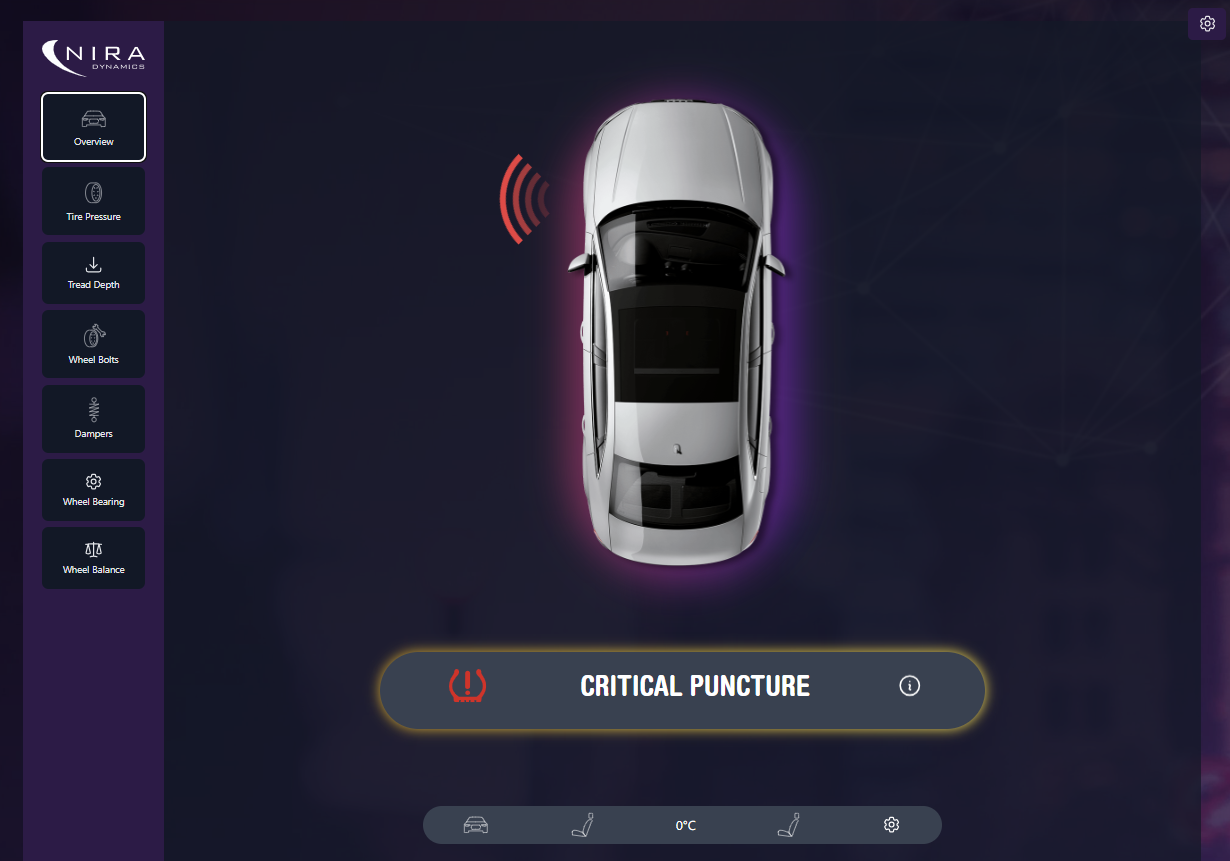
Providing advanced warnings for critical single-wheel punctures, even after a regular low-pressure warning has been issued. In the event of a critical puncture, TPI UX triggers a secondary alert instructing the driver to stop and inspect the tires. This added layer of warning enhances safety, particularly at higher speeds.
Tire Pressure Indicator – in less than a minute
The world-leading indirect tire pressure monitoring system, TPI by NIRA, determines the tire inflation pressure from the wheel speed signals. Here’s how it works.
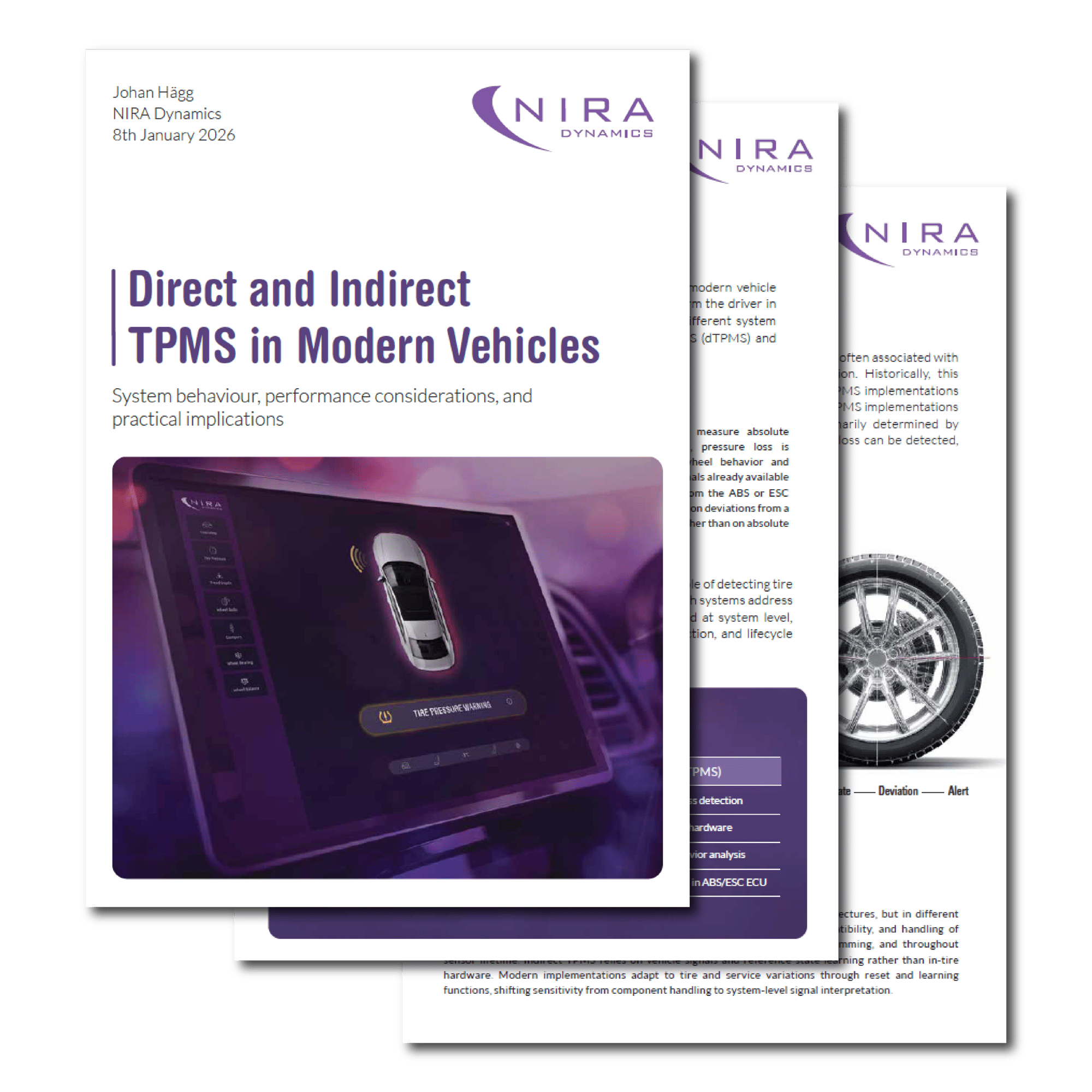
Direct vs Indirect TPMS in modern vehicles
A deep dive into system behavior, performance trade-offs, and real-world implications.
Frequently Asked Questions about Tire Pressure Indicator (TPI):
What is the Tire Pressure Indicator (TPI)?
The Tire Pressure Indicator (TPI) is NIRA Dynamics’ advanced software-based tire pressure monitoring system (TPMS). It detects under-inflated tires by using signals from existing vehicle sensors, without requiring any in-wheel pressure sensors, and notifies the driver immediately thanks to rapid detection algorithms.
How does TPI work without physical tire pressure sensors?
Unlike traditional TPMS that need hardware sensors inside each tire, TPI uses the vehicle’s wheel speed sensor and other existing signals to estimate tire pressure indirectly. It analyzes differences in wheel rotation to detect under-inflation, making it cost-effective and reliable without any extra sensors.
What is the difference between indirect TPMS and direct TPMS?
Direct TPMS uses physical pressure sensors inside each tire. Indirect TPMS, like TPI, uses existing vehicle sensors and software algorithms to estimate pressure changes, eliminating additional hardware while maintaining regulatory compliance.
What is the difference between TPI and TPI UX?
TPI UX is the next-generation version of NIRA’s Tire Pressure Indicator.
While standard TPI fulfills regulatory requirements for under-inflation detection, TPI UX enhances the driver experience through:
Clear and intuitive user interface.
Easy Reset functionality.
Critical Puncture Warning.
Percentage-based pressure deviation display.
TPI UX combines regulatory compliance with improved usability and driver confidence.
Does TPI comply with legal safety standards?
NIRA’s Tire Pressure Indicator (TPI) complies with all major global TPMS regulations, including ECE-R64 in Europe and FMVSS 138 in the U.S., making it approved for integration in vehicles sold worldwide.
How many tires can TPI monitor at once?
TPI can detect under-inflation in one, two, three, or all four tires. The system identifies which specific tire is affected, enabling targeted driver alerts.
How widely used is TPI technology?
NIRA’s Tire Pressure Indicator (TPI) has been installed in over 100 million vehicles worldwide, making it the world’s leading indirect tire pressure monitoring system.
What makes NIRA Dynamics’ Tire Pressure Indicator (TPI) unique?
NIRA combines deep signal processing expertise with decades of tire behavior research. The result is a highly robust, software-only solution that delivers safety, cost efficiency, and scalability without added hardware.
How quickly does TPI detect a pressure drop?
TPI continuously analyzes wheel speed signals while the vehicle is in motion. Pressure loss is typically detected within minutes of driving, depending on driving conditions and the rate of deflation. Rapid pressure drops are identified quickly through dynamic signal pattern analysis, enabling immediate driver alerts.
How is Tire Pressure Indicator integrated into vehicles?
TPI is a software-based solution typically integrated into the vehicle’s existing ABS or ESC control unit. Because it uses already available sensors, it requires no additional hardware components inside the tire, no batteries, and no RF communication modules. This makes integration efficient and well suited for modern vehicle architectures.
Is TPI suitable for electric vehicles?
Yes. TPI is particularly well suited for electric vehicles (EVs) and software-defined vehicles due to its hardware-free design and low system complexity. By maintaining optimal tire pressure, TPI helps improve energy efficiency and driving range, which are critical factors for EV performance.
How does Tire Pressure Indicator contribute to sustainability?
By helping drivers maintain optimal tire pressure, TPI reduces fuel consumption, extends tire lifespan, lowers CO₂ emissions, and reduces particulate emissions from tire wear.