Road Surface Alerts
Connected vehicle data delivering precise, real-time hazard warnings to enhance road safety and driver awareness.
Using vehicle data to produce relevant and precise hazard warnings at the right locations.
Black ice on a shadowy patch. Sudden aquaplaning in a downpour. A deep pothole hidden behind a hairpin corner. These are the moments where a single second can make all the difference. Traditional vehicle safety systems react during these events; Road Surface Alerts (RSA) empowers drivers to act before they happen.

What is Road Surface Alerts? A Proactive Safety System
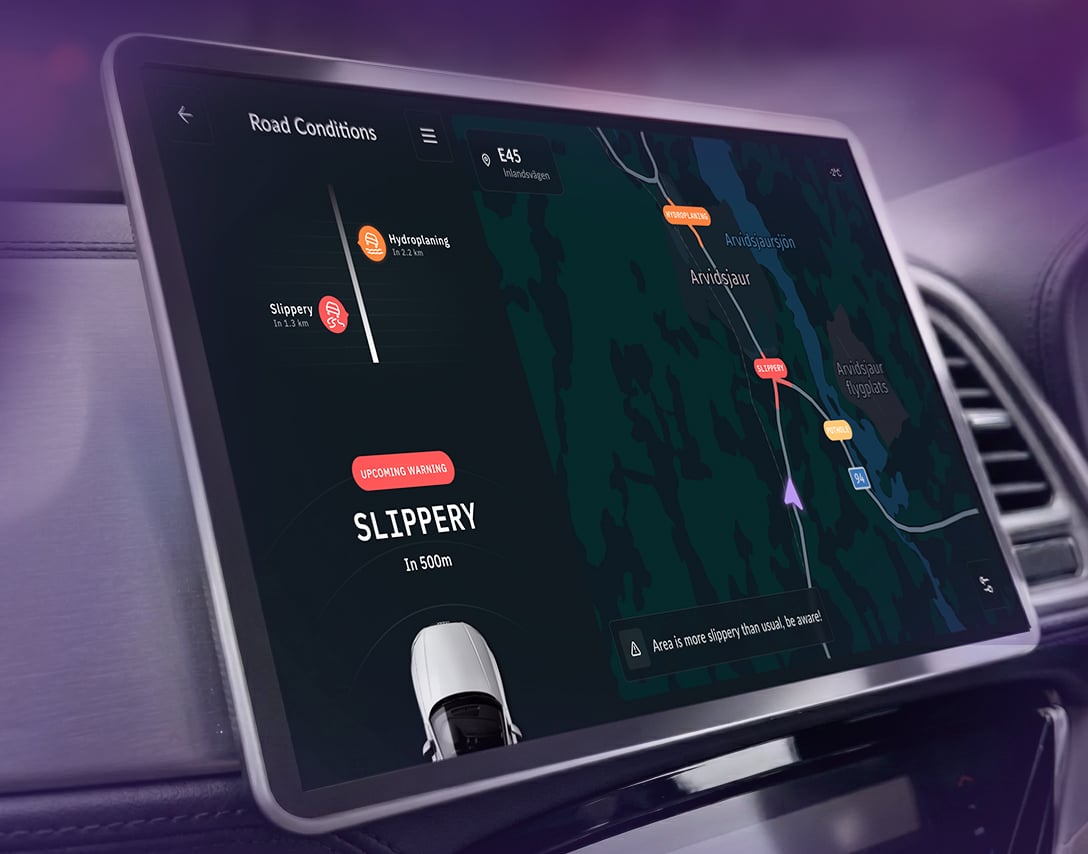
Road Surface Alerts is a software-based service that provides real-time, location-specific warnings about dangerous road conditions. Unlike generic temperature-based warnings (like the common "snowflake" icon), RSA identifies the actual presence of hazards by analyzing how vehicles are interacting with the road surface. This allows us to deliver alerts that are both highly accurate and directly relevant to the driver's immediate path.
The product is a revolutionary service that empowers drivers with real-time road-related alerts. This stream of alerts, curated for drivers, can be seamlessly integrated into an existing service such as the built-in vehicle navigation system. Other options are vehicle apps powered by Android Automotive or other automotive platforms. With this cutting-edge technology, drivers can feel safer and more informed on the road, making every journey a confident and enjoyable experience.
Common Use Cases for Road Surface Alerts
Road Surface Alerts provides critical safety information for a wide range of applications and users.
For Automotive OEMs:
Safety-First Navigation: Enable route planning that avoids known hazards, with real-time alerts before drivers reach dangerous areas and dynamic re-routing around black ice and flooding.
Vehicle Protection: Help drivers avoid potholes and rough road segments to prevent damage to suspension and tires, reducing maintenance costs.
Improve Driver Safety: Offer a premium safety feature that gives drivers precise warnings at exact hazard locations, increasing confidence in adverse conditions.
For Tier 1 Suppliers & Developers:
Build Safer Navigation Apps: Integrate real-time hazard warnings into navigation and mapping applications, allowing for safer route planning and dynamic re-routing.
Develop Innovative Safety Services: Create new applications and services that leverage NIRA's high-resolution road condition data.
Integrate with Existing Platforms: RSA's flexible API makes it easy to add hazard detection capabilities to existing automotive software platforms.
The most precise local hazard warnings

- Coverage where you need it
Every day, our proprietary road monitoring algorithms operate at large scale, collecting data where it matters most. - Data driven quality
Our alerts are based on aggregated road surface data from all contributing vehicles, not isolated events. - Precise warnings at relevant locations
Map-matched alerts deliver accurate warnings exactly where they are needed, increasing driver risk awareness. - It starts with slipperiness warnings, but it doesn't end there
NIRA Dynamics continue to develop warnings to provide drivers with best possible information to stay safe on the roads.
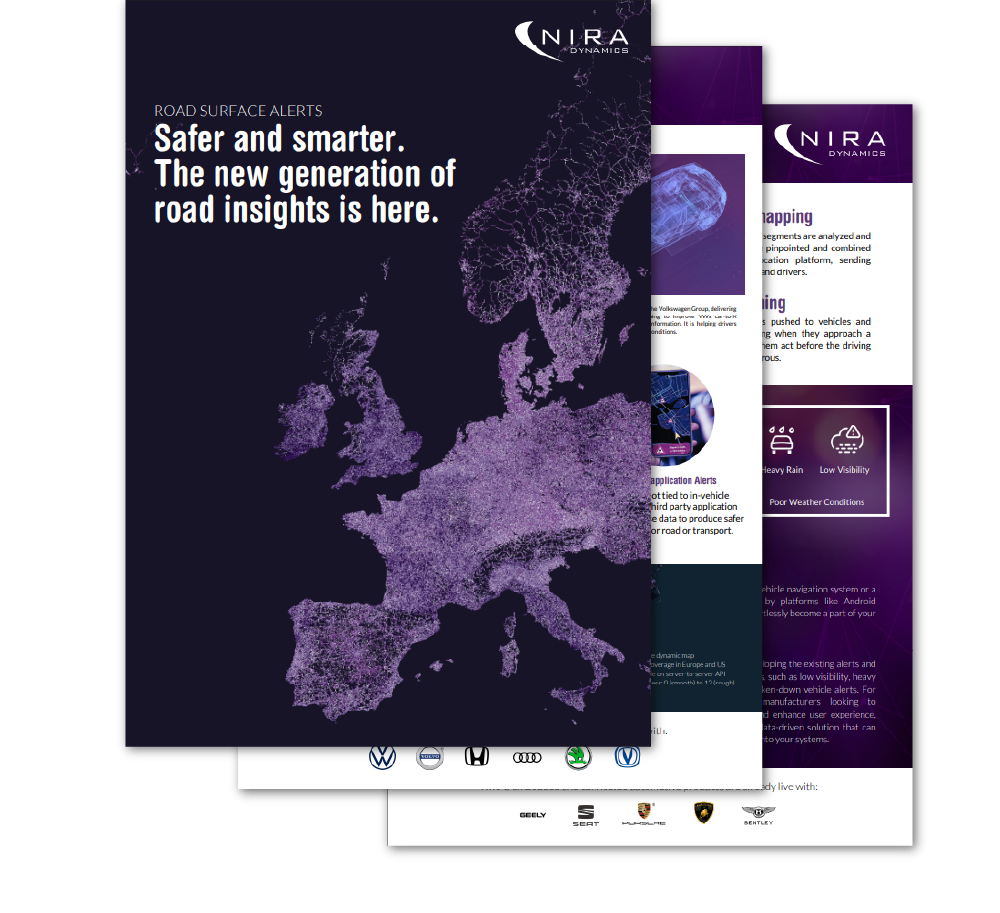
Download sample data & our Product Guide

Road Surface Alerts (RSA) – Available Data Types:
- Slippery Road - Detects low-friction surfaces that may cause loss of grip.
- Hydroplaning – Identifies risk of tire lift due to standing water.
- Very Rough Road – Highlights severely uneven or rough surfaces.
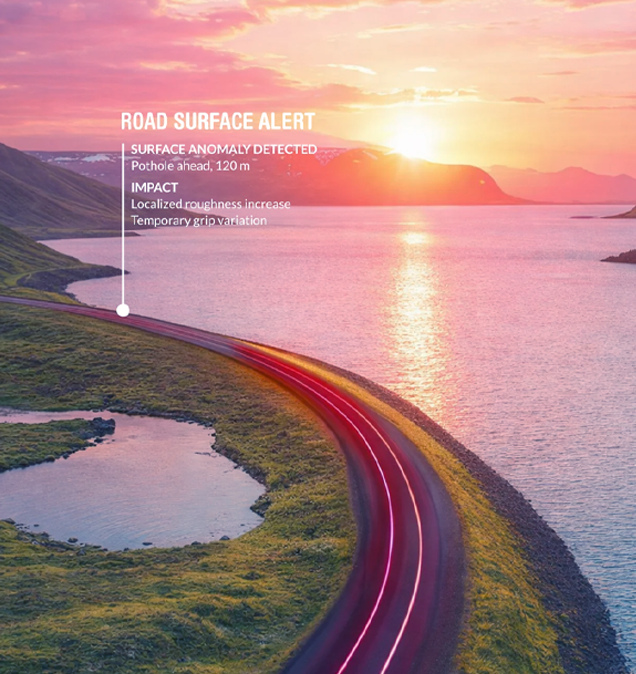
- Pothole – Pinpoints road surface damage and anomalies.
- Heavy Rain – Signals intense rainfall affecting traction and visibility.
- Low Visibility – Flags reduced sight distance due to weather or conditions.
How does Road Surface Alerts work?
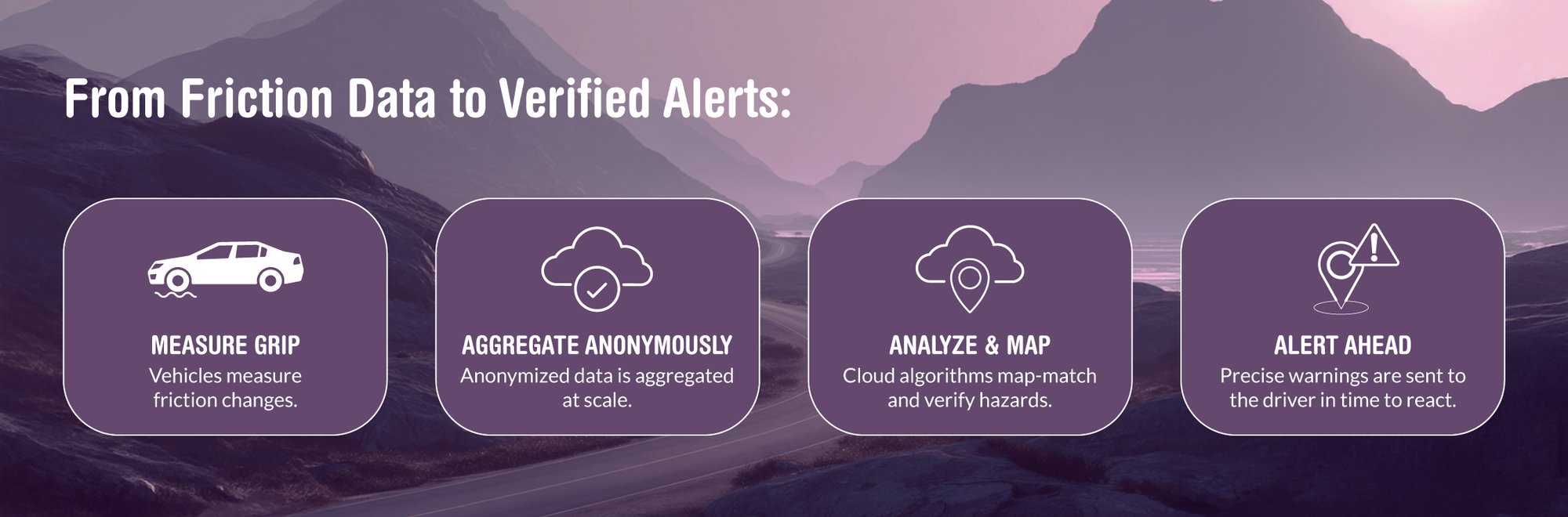
RSA system uses a sophisticated four-step process to turn raw vehicle data into life-saving alerts. This process is designed for maximum accuracy, privacy, and scalability.
1. Friction Measurement from Vehicle Sensors: Using our world-leading, software-only friction estimation technology, we analyze data from existing vehicle sensors (wheel speed, steering angle, etc.) to measure the tiniest changes in grip between the tires and the road.
2. Anonymized Data Aggregation: This friction data, along with other sensor readings, is collected from millions of vehicles. All data is fully anonymized and cannot be traced back to a specific vehicle or driver, ensuring complete privacy.
3. Cloud-Based Analysis and Mapping: The aggregated data is sent to the NIRA cloud, where it is map-matched and analyzed. Our algorithms identify and verify hazardous areas by looking for consensus in the data from multiple vehicles.
4. Precise, Actionable Warnings: Once a hazard is confirmed, a precise alert is generated and sent to vehicles approaching the area. This gives drivers a crucial window of time to slow down and prepare for the upcoming conditions.
Road Surface Alerts – in a minute
Q&A
Frequently Asked Questions about Road Surface Alerts (RSA):
What is Road Surface Alerts (RSA)?
Road Surface Alerts RSA is a connected vehicle service that delivers real time, location specific warnings about hazardous road surface conditions. By analysing how vehicles interact with the road surface, rather than relying on temperature alone, RSA provides accurate alerts that are directly relevant to the driver’s route and position.
How does Road Surface Alerts work?
Road Surface Alerts transforms vehicle sensor data into actionable hazard alerts through a structured process:
- Software uses existing vehicle sensors such as wheel speed and steering angle to detect small changes in grip between the tires and the road.
- Anonymized vehicle data from millions of vehicles is aggregated in the cloud.
- The data is analysed and matched to digital maps to identify hazardous road segments.
- When a hazard is confirmed, precise warnings are sent to vehicles approaching that location.
What types of road hazards does Road Surface Alerts detect?
Road Surface Alerts detects hazards related to road surface conditions, including slippery surfaces caused by ice or water, risk of aquaplaning, and other surface irregularities that affect grip and stability. The alerts are based on actual vehicle road interaction data rather than indirect weather signals.
How is Road Surface Alerts different from generic temperature-based warnings?
Traditional vehicle warnings often rely on temperature thresholds, such as a snowflake symbol, to indicate potential risk. Road Surface Alerts instead analyses real vehicle data to detect actual changes in road surface behaviour. This enables more precise, location specific warnings that reflect real world driving conditions.
How does Road Surface Alerts enhance vehicle safety?
By providing early warnings about hazardous surface conditions ahead, Road Surface Alerts increases driver awareness and gives drivers time to adapt speed or driving behaviour. This reduces the likelihood of being surprised by sudden changes in grip.
Can Road Surface Alerts be integrated into different platforms?
Yes. Road Surface Alerts can be integrated into built in vehicle navigation systems, vehicle applications, and third party applications used by drivers, fleets, or transport services.
What makes NIRA Dynamics’ Road Surface Alerts unique?
Road Surface Alerts is built on NIRA Dynamics’ friction estimation technology and uses aggregated data from millions of connected vehicles. This enables precise, map matched warnings at the exact locations where hazards occur, based on real world driving data.
How does Road Surface Alerts use vehicle sensor data?
Road Surface Alerts leverages data from existing vehicle sensors to measure small variations in tire and road interaction. All vehicle data is anonymized and aggregated in the cloud to ensure privacy while enabling accurate detection of hazardous road conditions.
How are hazard warnings delivered to drivers?
Once a hazardous road segment is identified through cloud based analysis, Road Surface Alerts generates precise alerts that are delivered to vehicles approaching the affected area. This gives drivers advance notice of potentially dangerous surface conditions.
Can Road Surface Alerts support fleet safety and connected vehicle services?
Yes. Road Surface Alerts can enhance fleet safety and connected services by providing timely road surface warnings as part of broader vehicle data solutions. This improves road awareness and supports better decision making for both drivers and fleet operators.