

Road networks have historically been maintained based on periodic inspections and visible deterioration. But roads are dynamic systems that change continuously under traffic, weather, and seasonal conditions.
Today, connected vehicle data makes it possible to understand those changes as they happen.
With high-frequency measurements collected from vehicles in normal traffic, road authorities can monitor road condition development at network scale. This creates new possibilities to detect deterioration earlier, prioritize maintenance more accurately, and anticipate when interventions will be needed.
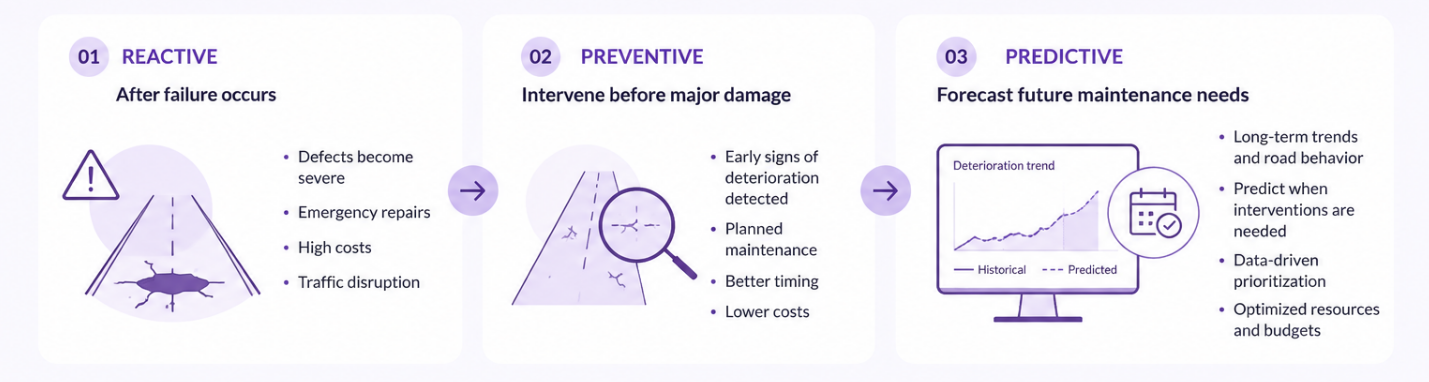
As a result, maintenance strategies can shift from reactive repairs toward preventive and predictive road asset management.
Continuous insight into how roads actually perform
As vehicles travel through the road network, onboard sensors continuously capture how the road surface behaves beneath them. Variations in vibration, wheel movement, and vehicle dynamics reflect changes in pavement condition under normal driving conditions.
When these measurements are aggregated across large vehicle fleets, they provide a network-wide view of road performance. Instead of relying on periodic snapshots, road authorities gain access to high-frequency measurements collected through everyday traffic.
Because the data is collected through normal traffic flows, monitoring can be performed continuously and across far larger parts of the network than traditional inspections alone, creating near real-time visibility into road condition development.
This creates a more detailed understanding of how road conditions evolve over time, including:
- Changes in road roughness and overall surface condition
- Emerging surface anomalies such as potholes
- Long-term deterioration trends across the network
- Durability and performance of completed repairs
- Predictions of when maintenance interventions will likely be required
- More efficient resource allocation based on measured road data
By combining high-frequency measurements with historical road condition data, deterioration patterns become visible earlier and with greater precision.
For example, accelerated roughness development after winter conditions may indicate where preventive resurfacing should be prioritized before potholes and structural damage begin to escalate.
The value lies not only in identifying existing defects, but in understanding how road conditions are developing before failures become severe.

Moving from reactive to predictive maintenance
The ability to monitor road conditions continuously changes how maintenance decisions are made. Instead of reacting after defects become severe, road authorities can identify early signs of deterioration and intervene before damage escalates. Maintenance can be prioritized based on measured road performance rather than assumptions or infrequent inspections.
Preventive maintenance helps address deterioration before major failures occur, while predictive maintenance uses long-term trends and measured road behaviour to estimate when interventions will likely be needed.
The result is a shift from reactive maintenance toward a more predictive and operational approach to road asset management:
- More accurate maintenance planning
- Better prioritization of budgets and resources
- Improved follow-up on repair durability and performance
- Reduced lifecycle costs across the road network
- More reliable and durable infrastructure
With a data-driven approach, maintenance decisions become more objective, transparent, and cost-efficient because they are grounded in continuously collected road data.
Ultimately, connected vehicle data changes the role of road monitoring itself. Instead of relying on occasional snapshots of network condition, road authorities gain continuous visibility into how road conditions develop across the network over time — allowing maintenance decisions to be based not only on current condition, but on how the network is likely to develop next.


.png?width=1024&height=1024&name=Slipperiness%20warning%20(1).png)