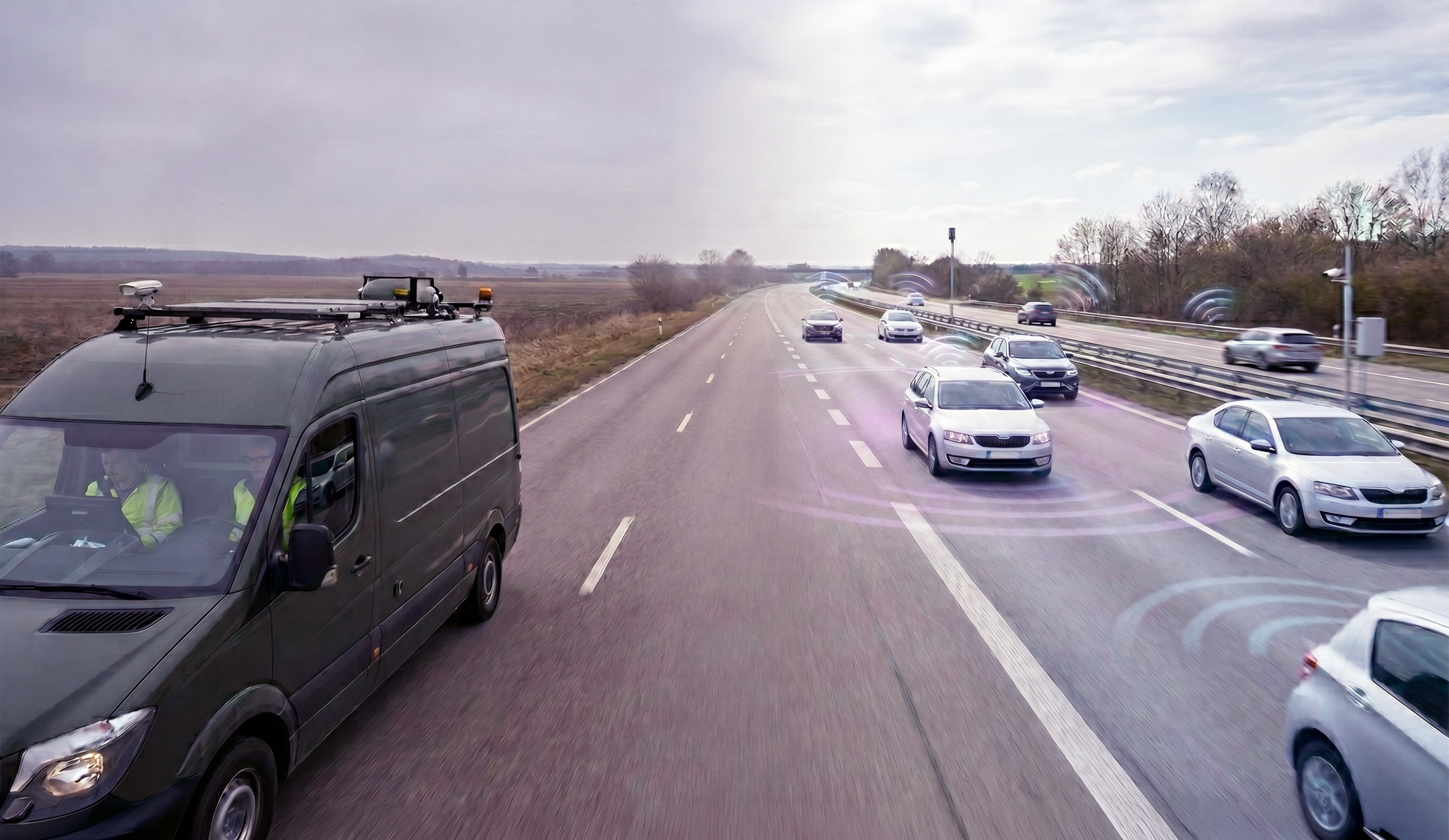
Road condition monitoring has traditionally relied on periodic inspections. Specialized measurement vehicles, manual surveys, and visual assessments are used to evaluate pavement condition at specific points in time.
While these methods provide structured and standardized data, they are inherently limited by frequency and coverage. Road networks evolve continuously, but measurements are taken intermittently. By the time deterioration is identified, it has often already progressed.
This gap between when data is collected and when conditions change is a fundamental challenge in infrastructure management.
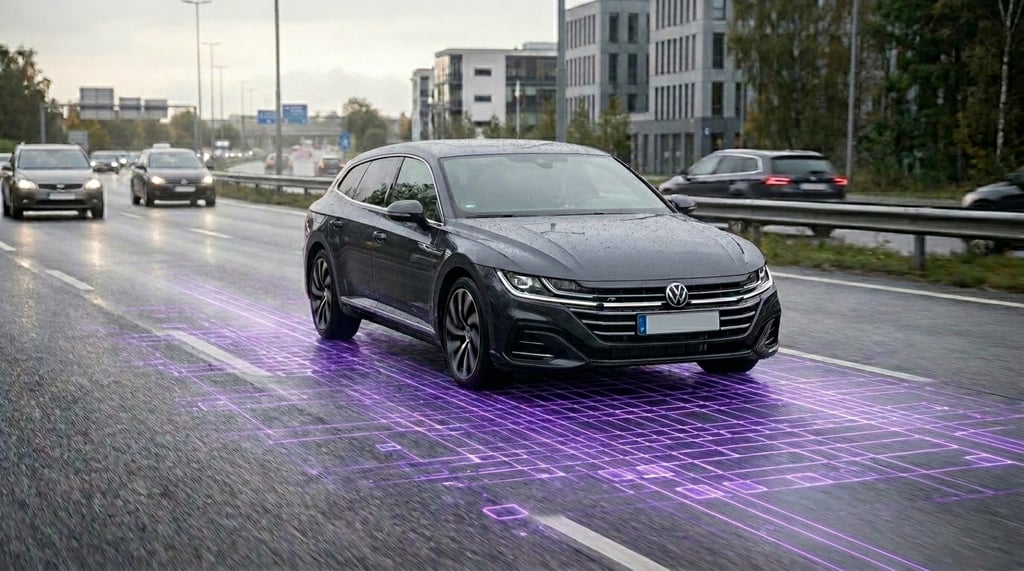
A different approach is now established—based on connected vehicles and continuous data collection.
What are static road surveys?
Static road surveys are traditional methods where road conditions are measured at specific intervals using dedicated equipment or manual inspections. They provide structured, high-precision data at defined points in time, but are limited in frequency and coverage.
Static surveys are characterized by:
- High-precision measurements at specific points in time
- Limited temporal frequency
- Coverage constrained by planned survey routes
- Dependence on dedicated equipment and manual processes

What are continuous connected vehicle insights?
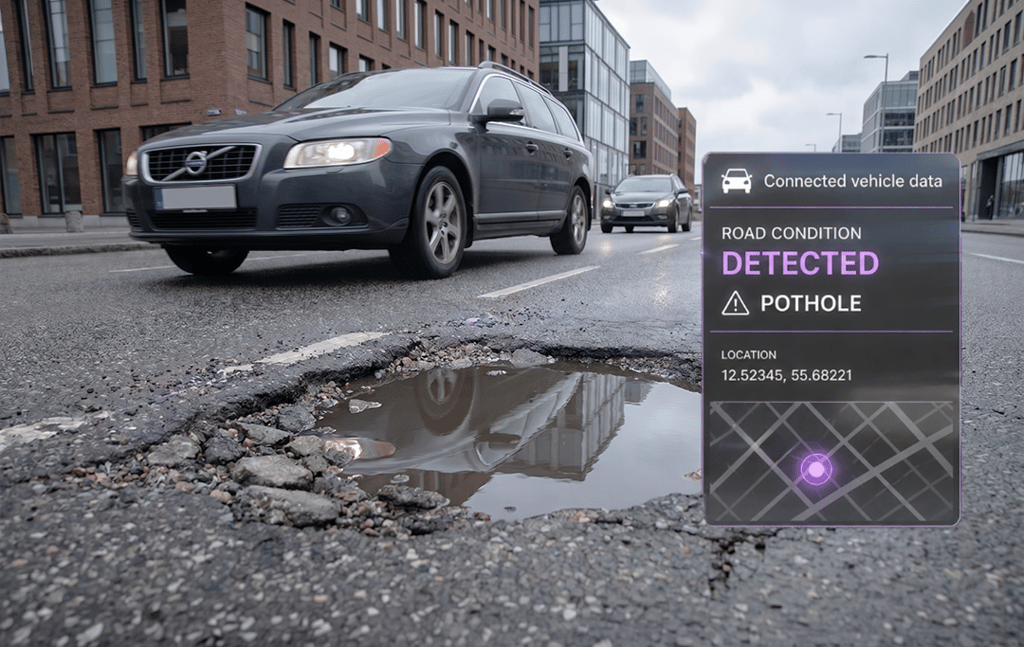
Continuous connected vehicle insights are based on data collected from vehicles operating in everyday traffic, enabling ongoing monitoring across the road network. By interpreting vehicle signals through models and sensor fusion, they detect changes in roughness, anomalies, and deterioration as they occur.
This approach is characterized by:
- Continuous data collection across the network
- High-frequency measurements based on real traffic
- Detection of changes and deviations over time
- Aggregation of data from large numbers of vehicles

The fundamental difference: snapshots vs continuous understanding
The key difference between these approaches lies in how road conditions are observed over time.
Static surveys provide snapshots of the network at specific intervals.
Connected vehicle data provides continuous insight into how conditions change.
This affects not only data availability, but how maintenance decisions are made. With periodic data, deterioration is often identified after it has progressed. With continuous data, changes can be detected as they occur.
Key differences between static road surveys and connected vehicle insights
| Aspect | Static surveys | Connected vehicle data |
|---|---|---|
| Frequency of data | Conducted at defined intervals | Collected continuously through everyday traffic |
| Network coverage | Covers selected routes based on planning | Scales across the network based on vehicle movement |
| Detection of change |
Compares conditions between survey cycles |
Detects gradual deterioration and sudden events in real time |
|
Representation of road conditions |
Measures conditions under controlled scenarios |
Reflects how roads are experienced in real driving conditions |
| Operational model |
Depends on dedicated equipment and scheduled campaigns |
Generated passively from existing vehicle fleets |
From periodic inspection to data-driven road management
The shift toward connected vehicle insights does not replace traditional surveys, but extends their role.
Instead of relying solely on infrequent measurements, road condition becomes a continuously updated dataset. This enables earlier detection of deterioration, improved prioritization of maintenance, and more efficient allocation of resources.
Continuous monitoring from connected vehicles enables road condition data to support both daily operations and long-term planning.
Connected vehicle insights enable:
- Daily network monitoring
- Detection of emerging issues as they occur
- Ongoing tracking of deterioration rates
- More accurate prioritization of maintenance actions
Static surveys complement this by providing reference measurements and supporting detailed investigation when needed.
Together, these approaches enable a shift from reactive inspection to data-driven road management.
A new baseline for road condition insight
With connected vehicle data, continuous monitoring of road conditions across entire networks is already a practical reality. Instead of relying on periodic snapshots, road conditions can be measured continuously at scale, capturing how the network performs and how it evolves over time.
This represents a shift from periodic observation to continuous understanding, where static surveys provide reference points and detailed validation, while continuous data provides the context needed to monitor, prioritize, and manage the network effectively.

.png?width=1024&height=1024&name=Slipperiness%20warning%20(1).png)