How Software Estimates Tire-Road Friction Without Additional Sensors

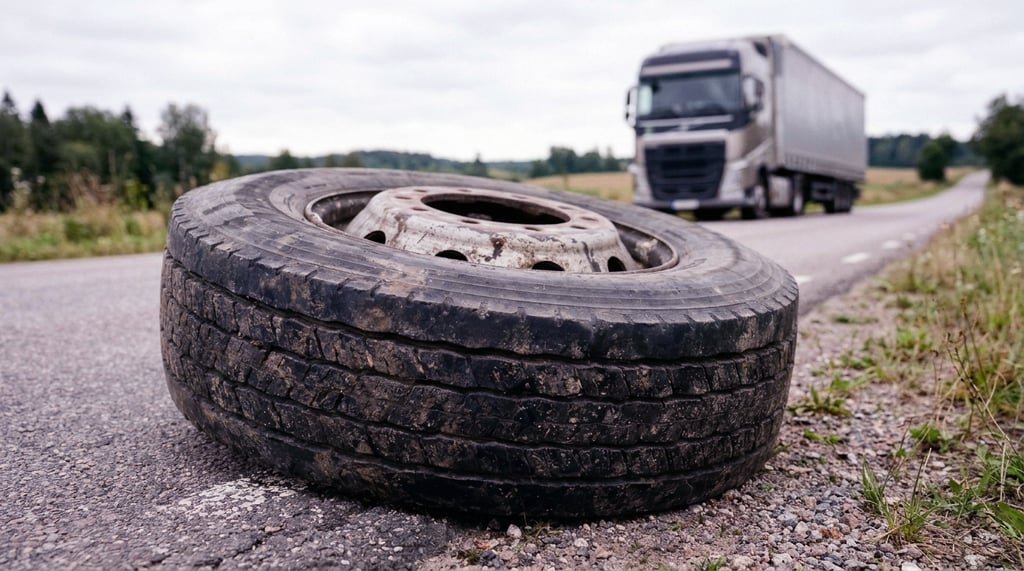
The road can look perfectly safe while the available grip tells a very different story.
For a vehicle, that difference matters. Braking, accelerating and steering all depend on the friction between the tires and the road. Yet available friction can change significantly with rain, snow, ice, road surface and tire characteristics.
Traditional safety systems such as ABS, Electronic Stability Control (ESC) and traction control are designed to intervene as the vehicle approaches its dynamic limits. But what if the vehicle could understand the available grip earlier?
That is the purpose of real-time tire-road friction estimation.
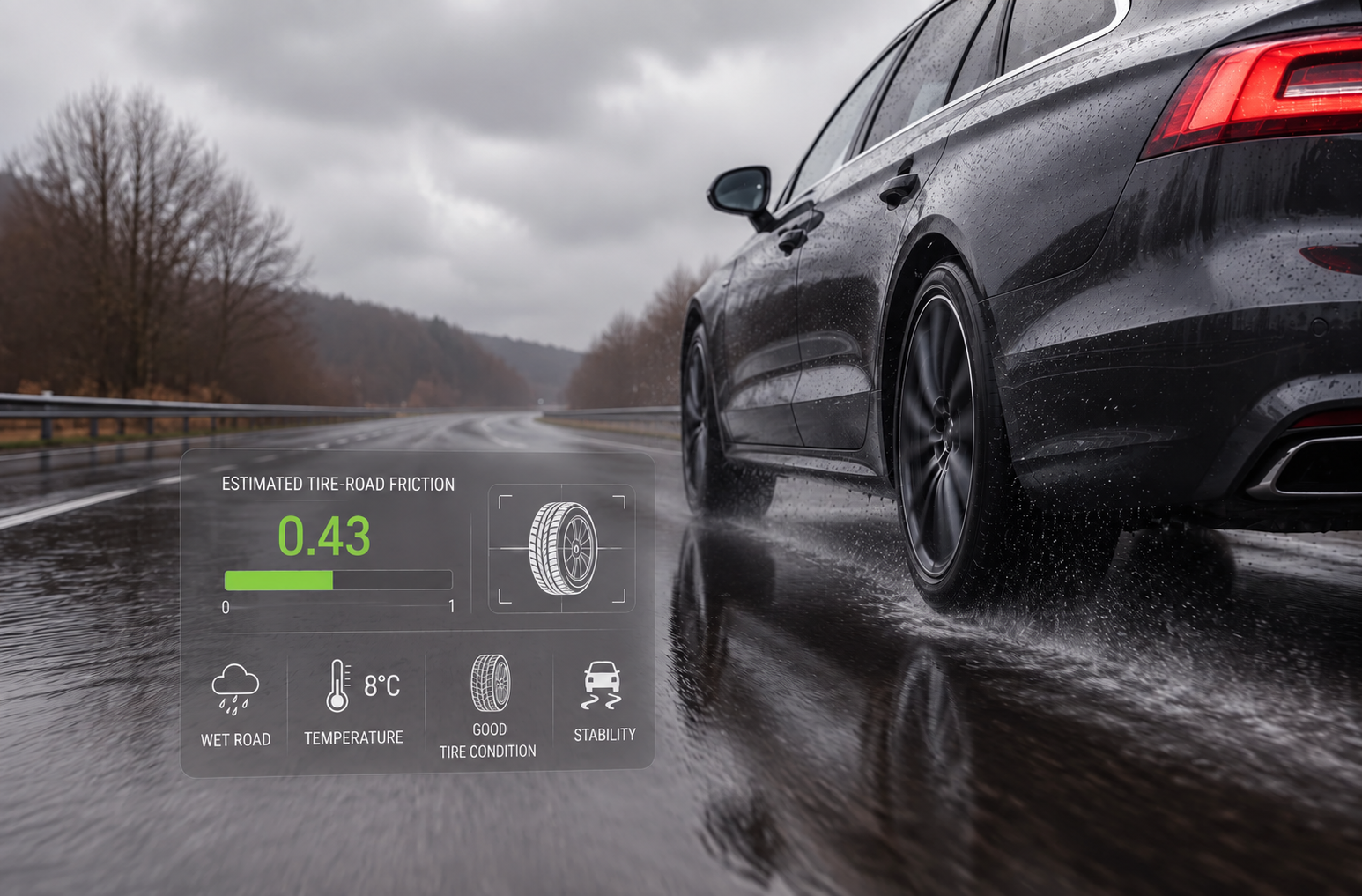
NIRA Dynamics’ Tire Grip Indicator (TGI) is a software-based solution that continuously estimates available tire-road friction during normal driving. It uses signals already available in the vehicle, meaning no additional friction sensor is required.
For ADAS and automated driving, this adds an important piece of information: not only what is happening around the vehicle, but what the vehicle can physically do on the road beneath it.
Why tire-road friction matters
The interaction between the tires and the road determines how much grip a vehicle has available for braking, accelerating and steering.
On a dry road, available grip can be high. On wet roads, snow or ice, it can decrease considerably. However, grip depends on more than just the road surface. Tire characteristics, temperature and environmental conditions all play a role.
This means that two vehicles driving on the same road may experience different levels of grip depending on their tires and operating conditions.
The effect on vehicle dynamics is clear: lower available grip limits the forces a vehicle can generate for braking, acceleration and steering.
How can a vehicle estimate friction without an additional sensor?
Modern vehicles already measure a great deal about their own movement.
Wheel-speed sensors monitor wheel behavior, while other existing vehicle sensors provide information about vehicle dynamics and driver inputs. Together, these signals contain information about how the tires are interacting with the road.
NIRA’s Tire Grip Indicator uses this existing vehicle data to estimate the available tire-road friction.
The important word here is estimate.
Tire-road friction is not directly measured by a standard vehicle sensor. Instead, software analyzes the relationship between the vehicle's motion, wheel behavior and the forces acting at the tire-road interface.
During normal driving, vehicle movements and wheel behavior provide information about the tire-road interaction. By analyzing these signals, TGI can estimate available grip without requiring the vehicle to reach a critical loss-of-traction situation.
In other words, the vehicle itself becomes the sensor.
This is also why tire-road friction estimation is more complex than simply identifying whether a road is “dry” or “wet.”
Available grip depends on both sides of the contact: the road and the tire. Different tires can provide different levels of grip on the same surface, while tire characteristics can change with factors such as wear and operating conditions.
Tire-road friction estimation therefore needs to account for the interaction between the tire and the road, rather than simply classifying the road surface.
Tire Grip Indicator vs. traction control and ESC
TGI, traction control, ABS and ESC all deal with tire-road interaction, but they answer different questions.
Traction control detects excessive driven-wheel slip and intervenes to manage it. ABS helps prevent wheel lock-up during braking, while ESC helps stabilize the vehicle when its actual motion deviates from the intended path.
TGI works earlier in the sequence.
Rather than asking “Are we losing grip?”, it estimates “How much grip is available?”
TGI does not replace ABS, ESC or traction control. Instead, it provides another layer of information that can be available during normal driving, before those systems would typically need to intervene.
The difference can be illustrated simply:
With friction estimation
Available grip is estimated
↓
Low friction is recognized
↓
The driver or ADAS function can adapt
↓
A larger safety margin can be maintained
Without friction estimation
Available grip is unknown
↓
The vehicle approaches its dynamic limit
↓
Significant slip or instability occurs
↓
ABS, ESC or traction control intervenes
This shift from reacting to loss of grip toward understanding available grip beforehand is what makes friction estimation particularly relevant for ADAS.
What real-time friction data means for ADAS
ADAS functions rely on sensors such as cameras and radar to understand the surrounding environment. Friction estimation adds another type of information: the grip available to execute a maneuver.
Consider Adaptive Cruise Control (ACC). An ACC system can measure the distance and relative speed to the vehicle ahead, but the available braking margin also depends on tire-road friction.
When integrated into an ACC system, friction information can support adjustments to following distance and acceleration or deceleration behavior based on current road conditions.
The same principle applies to Automatic Emergency Braking (AEB). Available friction affects how effectively the vehicle can decelerate, making it relevant when evaluating braking capability and intervention strategies.
In this way, friction data can give ADAS functions additional physical context for their decisions, particularly when road conditions change.
The challenge: friction is constantly changing
Real-time friction estimation is complex because neither the road nor the tire is constant. Conditions can change within meters, different wheels may encounter different surfaces, and tire characteristics also influence available grip.
The estimator therefore needs to distinguish between changes caused by the road, the tire and the vehicle’s operating conditions.
There is also an important difference between estimating grip now and knowing what lies ahead. Onboard estimation provides information about the tire-road interaction the vehicle is currently experiencing. Connected road data can complement this with information from vehicles that have already travelled the road.
Together, they can help answer two different questions:
How much grip is available now and what conditions are ahead?
Tire-road friction estimation and autonomous driving
For automated driving, understanding the environment is only part of the challenge. The vehicle also needs to determine whether a planned braking, acceleration or steering maneuver is physically achievable.
This places high demands on friction information, including accuracy, low latency and the ability to account for uncertainty and rapidly changing conditions.
Friction estimation can complement cameras, radar, vehicle-dynamics sensors and connected road data by adding information about the tire-road interaction itself.
Together, these inputs can give an automated vehicle a more complete picture of both its surroundings and its available dynamic capabilities.
Understanding grip before it becomes critical
ABS, ESC and traction control help manage the vehicle as it approaches its dynamic limits. Tire-road friction estimation adds information earlier in the process.
NIRA’s Tire Grip Indicator continuously estimates available grip during normal driving using information already available in the vehicle.
For ADAS and automated driving, that means another piece of information for making better-informed decisions about braking, acceleration and vehicle control.
Because understanding the road ahead is important. Understanding the grip available to drive on it is just as critical.
Read more about NIRA's Tire Grip Indicator (TGI)
Frequently asked questions
How can a vehicle estimate tire-road friction without additional sensors?
Software can estimate tire-road friction by analyzing signals already available in the vehicle, including wheel-speed and vehicle-dynamics information. NIRA’s Tire Grip Indicator uses these existing signals to estimate available grip continuously during normal driving, without requiring a dedicated friction sensor.
What is real-time tire grip estimation?
Real-time tire grip estimation is the continuous estimation of the friction available between the tires and road while driving. It gives the vehicle information about its available grip before conventional slip-control systems would typically need to intervene.
What is the difference between tire grip estimation and traction control?
Traction control detects excessive wheel slip during acceleration and intervenes to control it. Tire grip estimation instead estimates how much friction is available. In simple terms, traction control manages a loss of traction, while friction estimation provides information about the available grip beforehand.
Why does friction estimation matter for ADAS?
ADAS functions depend on the vehicle’s ability to brake, accelerate and steer. Those capabilities change with available tire-road friction. Real-time friction information can therefore give ADAS functions additional context for adapting their behavior to current road conditions.
How does tire condition affect friction estimation?
Available grip depends on the combination of tire and road, not the road alone. Tire characteristics, wear and operating conditions can affect the forces available at the contact patch. A tire-road friction estimator therefore needs to account for variations in both the tire and the road.
What are the main challenges of friction estimation for self-driving vehicles?
Key challenges include rapidly changing and mixed-friction surfaces, variations in tire characteristics, estimation uncertainty and the need for timely information. Autonomous vehicles may also need information about friction ahead, making connected road-condition data a useful complement to onboard friction estimation.