Industry
Road MaintenanceThe Challenge
The City of Wolfsburg manages a complex road network serving both urban commuter traffic and heavy industrial logistics. Traditional infrastructure management relied heavily on manual inspections, reactive maintenance processes, and historical accident data, making it difficult to identify deterioration or safety risks before issues became critical. At the same time, the city aimed to advance the digitalization of infrastructure operations without requiring new hardware investments or major workflow changes.
The Solution
By integrating NIRA data directly into existing systems and workflows, Wolfsburg gained near real-time insights into road conditions and traffic behavior. Using road roughness, harsh braking, and speed data, the city can identify safety-critical hotspots faster, prioritize inspections more effectively, and support more data-driven maintenance planning. The integration enables Wolfsburg to move from reactive infrastructure management toward more predictive and proactive operations.
Website
https://www.wolfsburg.de/“The continuous inflow of data enables us to identify at an early stage where traffic loads are increasing and where road conditions are changing. It is particularly valuable that we can now map road quality across the entire city and that newly emerging road surface damage becomes visible in our maps at an early stage. In addition, we capture the condition of road markings and traffic signs, as well as indicators such as harsh braking and speed patterns, which help us identify potential risk areas early on. All of this information is combined with additional map layers and infrastructure data to create an increasingly comprehensive overall picture. The database is currently growing significantly and continues to expand, making it easier for the city to plan, assess situations, and make faster, well-informed decisions.”
About the City of Wolfsburg
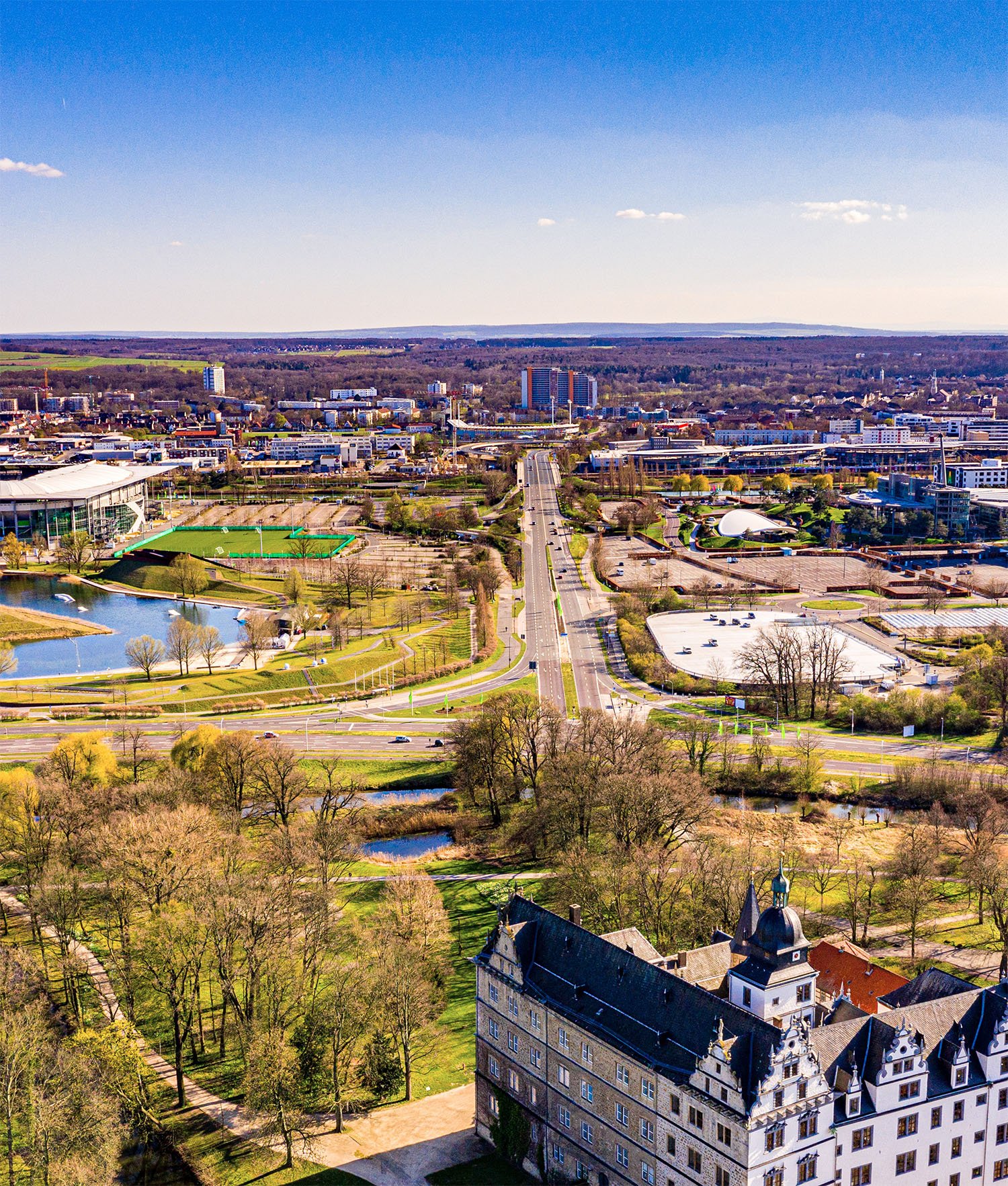
The City of Wolfsburg is a major urban municipality in Lower Saxony, Germany, known as a key center of the automotive industry and the headquarters of Volkswagen Group. Founded in 1938 as a planned city, Wolfsburg has developed into an important economic hub with strong ties to mobility innovation and industrial production.
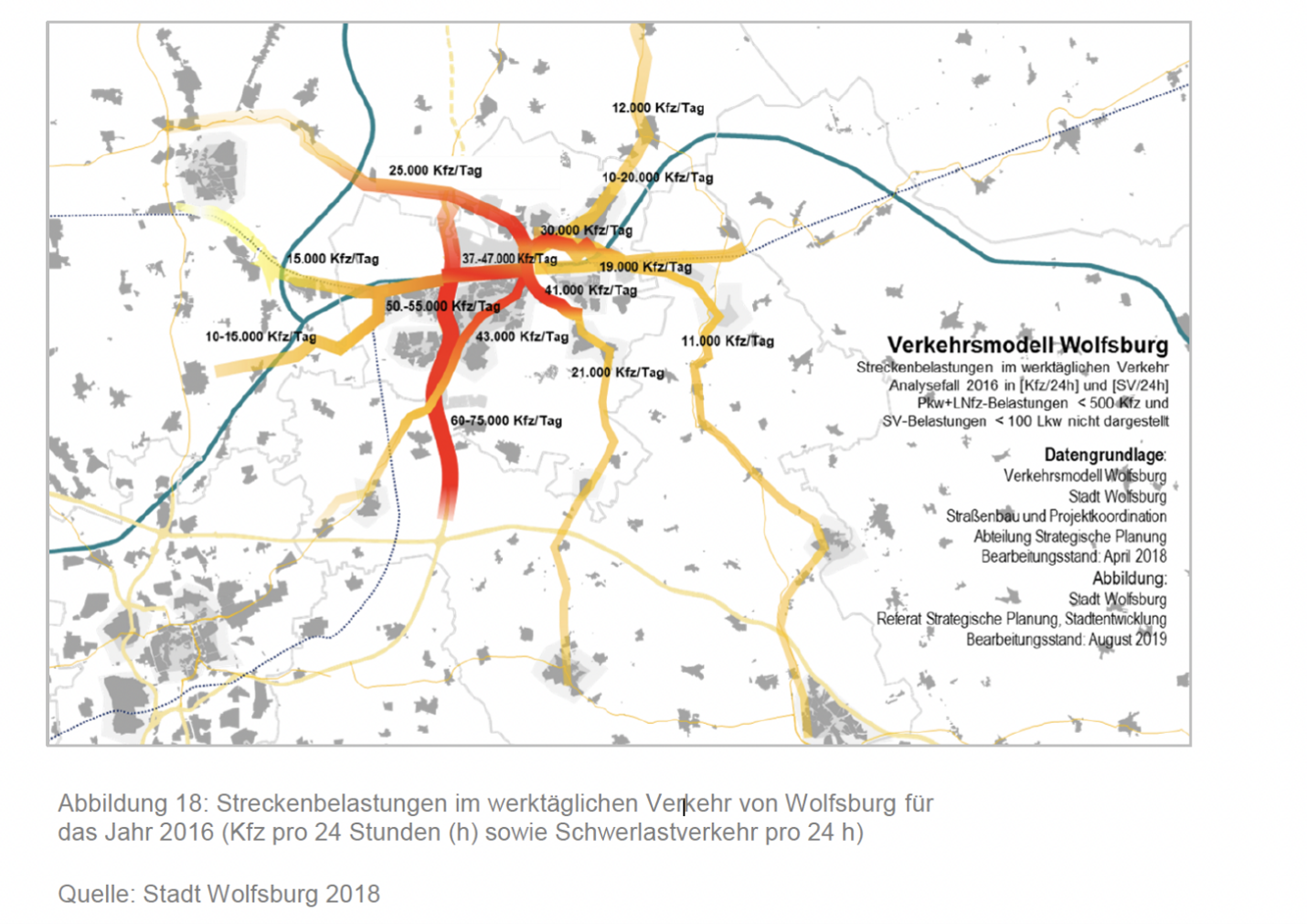
The city is responsible for managing a well-developed transport network that includes urban roads, regional connections, and critical links to the German motorway system, such as the A39 and A2 corridors. Its infrastructure supports both commuter traffic and industrial logistics, resulting in a mix of high-capacity arterial roads and urban streets.
Wolfsburg places a strong emphasis on future-oriented mobility solutions, including sustainable transport, electrification, and smart city development. As part of its “Standortkonzept 2035+”, Wolfsburg is systematically advancing multimodal mobility, infrastructure efficiency and sustainable urban transport. Central to this ambition is the Smart City initiative, positioning Wolfsburg as a digital model city with strong capabilities in connected infrastructure and data-driven services.
The Challenge
Road infrastructure management in Wolfsburg relied heavily on reactive processes. Roads were assessed through manual inspections, maintenance was scheduled based on visible wear or reported defects, and road safety decisions were largely driven by historical accident data. This approach made it difficult to stay ahead of deterioration or identify risk areas before incidents occurred.
The city manages a complex network serving both urban commuter traffic and heavy industrial logistics with different load profiles, wear patterns, and safety needs across varying road segments. Covering this network comprehensively through traditional methods was neither efficient nor scalable with available resources.
At the same time, Wolfsburg was actively working to advance the digitalization of its infrastructure operations. The goal was to move toward more data-driven workflows without requiring new hardware investments or significant changes to existing systems and processes.
The Solution: A Digital Foundation for Action
To support its digitalization efforts, Wolfsburg integrated NIRA Dynamics’ data directly into its existing systems and workflows, avoiding the need for an additional standalone solution. This enhances the relevance of current tools while ensuring practical usability in daily operations. The data is automatically updated on an ongoing basis and complements existing historical datasets with near real-time information, without requiring additional manual effort. The web-based setup also allows flexible access across devices, including mobile use in the field.
As a result, two key application areas emerged:
1. Turning data into immediate road safety action
By leveraging harsh braking and speed data, Wolfsburg gained a new, dynamic perspective on road safety across the network.
This enables the city to:
• identify safety-critical hotspots based on actual driving behavior
• perform initial assessments of potential risk areas
• support decisions with objective, data-based insights
Instead of relying solely on manual observations or incident reports, Wolfsburg can now detect potential risk areas within days and compare them with official accident statistics. This introduces a new dimension to road safety analysis, moving from a purely reactive view toward a more proactive and forward-looking approach.
By making the data available across all relevant departments, Wolfsburg establishes a consistent basis for decision-making. This facilitates faster and more objective responses to both internal requirements and external inquiries, including those from the political level.
The next step is to move from identification to action, using these insights to address problem areas through targeted measures.
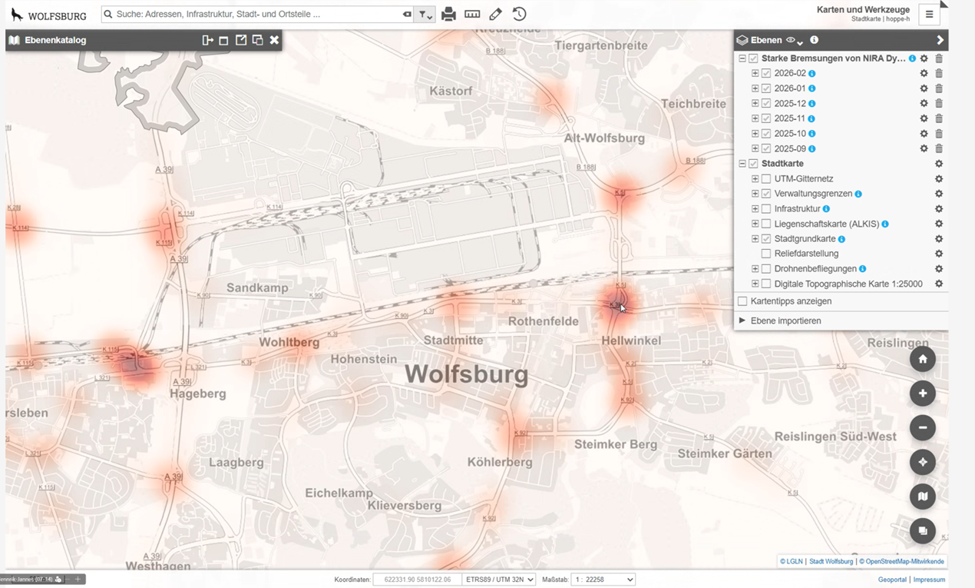 Fig. 1: NIRA Harsh Braking Cluster.
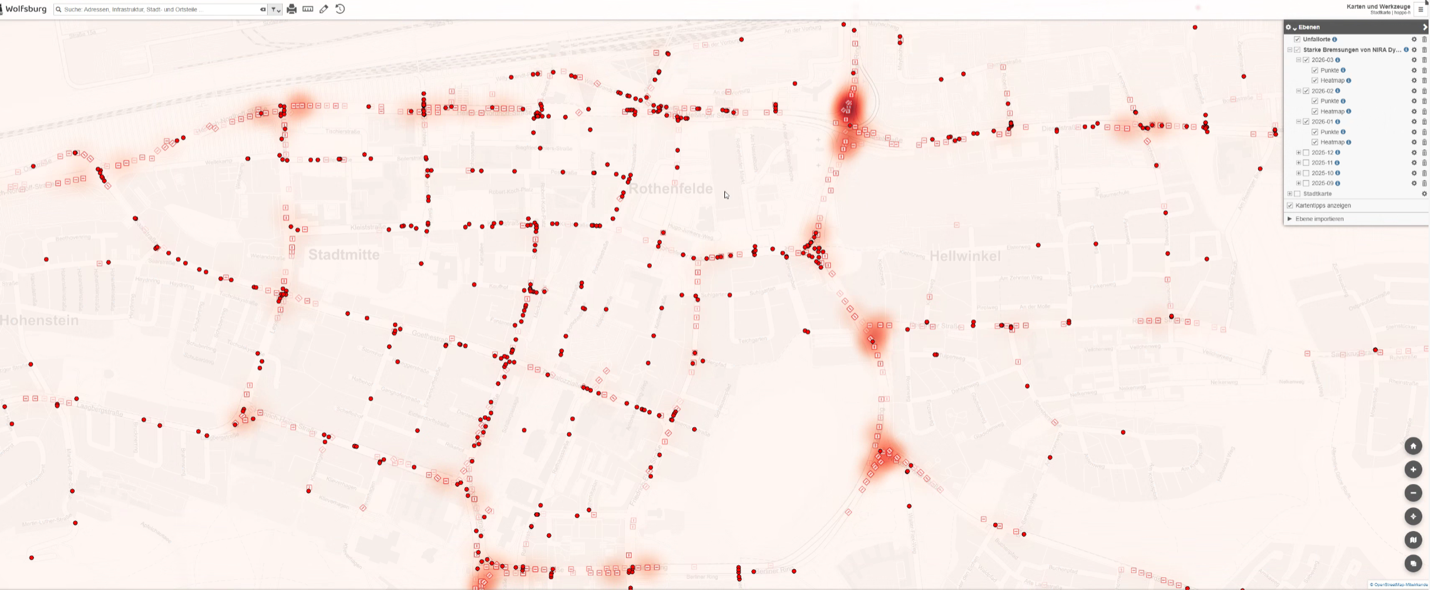 Fig. 2: NIRA Harsh Braking Cluster combined with official accident statistics.
2. Digitalizing maintenance planning through road condition insights
Wolfsburg is using NIRA’s road roughness data as a core input for maintenance planning.
Fully integrated into the city’s own systems, the data is:
• accessible within existing dashboards
• directly usable in operational workflows
This allows the city to:
• detect road sections that require attention automatically
• prioritize manual inspections more effectively
Already today, this supports a more structured and data-driven maintenance process. Looking ahead, Wolfsburg aims to build on this foundation by moving toward more predictive maintenance planning, identifying where interventions will be needed before issues become critical. This enables a more efficient allocation of available budget within existing financial constraints.
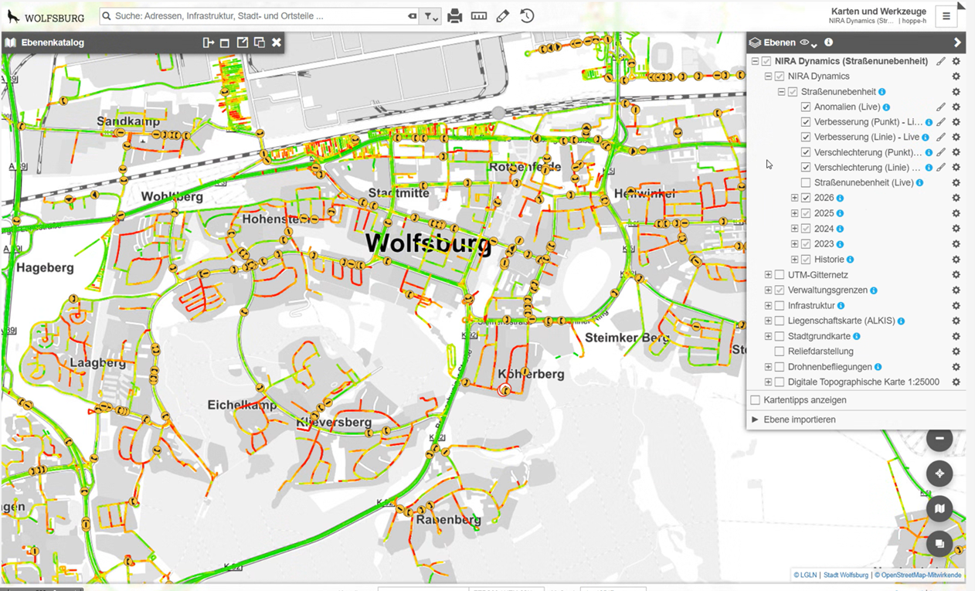 Fig. 3: NIRA IRI Map.
The Results: Measurable Impact on Daily Operations
- Reduction in preparation time for manual road inspections, thereby improving the efficiency and focus of the inspection process.
- Expanded attention not only to primary roads but also to secondary roads. With the gained automation, secondary roads can be monitored on a constant basis as well.
- From months to weeks: Reduction in detection time for critical road degradation, particularly following the winter season, as well as faster identification of safety-critical hotspots.
- Seamless integration: Zero new hardware investments required, with data flowing directly into the city's existing Pavement Management System.
Looking Ahead: From Digitalization to Predictive Operations
With both road safety and road condition data fully integrated, Wolfsburg is now focusing on the next phase of its digitalization journey.
Key priorities include:
• turning identified safety hotspots into targeted interventions
• advancing from condition-based planning toward predictive maintenance
• further expansion of data usage across internal departments, such as the Tiefbauamt, as well as across related municipal entities, including the Ordnungsamt.
The direction is clear: to move from data integration and insight generation toward more predictive, proactive infrastructure management, where decisions are increasingly driven by forward-looking data rather than reactive measures.
At the same time, the City of Wolfsburg is exploring additional use cases, such as road sign recognition and monitoring, to further optimize operations while gradually developing new, data-driven capabilities.