Industry
Road MaintenanceThe Challenge
The Department of Roads and Infrastructure lacked consistent, up-to-date insight into road conditions across the network. Data from periodic inspections and measurement campaigns was costly and time-consuming, and often resulted in fragmented information that made it difficult to compare conditions and prioritize maintenance.
The Results
With NIRA Dynamics’ Road Health data, the department now has consistent, network-wide insights into road conditions. This enables data-driven maintenance planning, more transparent prioritization, and more efficient allocation of budgets and resources.
Key products
Road Health by NIRAWebsite
https://home.province.bz.it/en“Working with NIRA Dynamics has helped us to base our maintenance planning and budget allocation on reliable, consistent data covering the entire road network, enabling more transparent and informed decision-making.”
About Bolzano
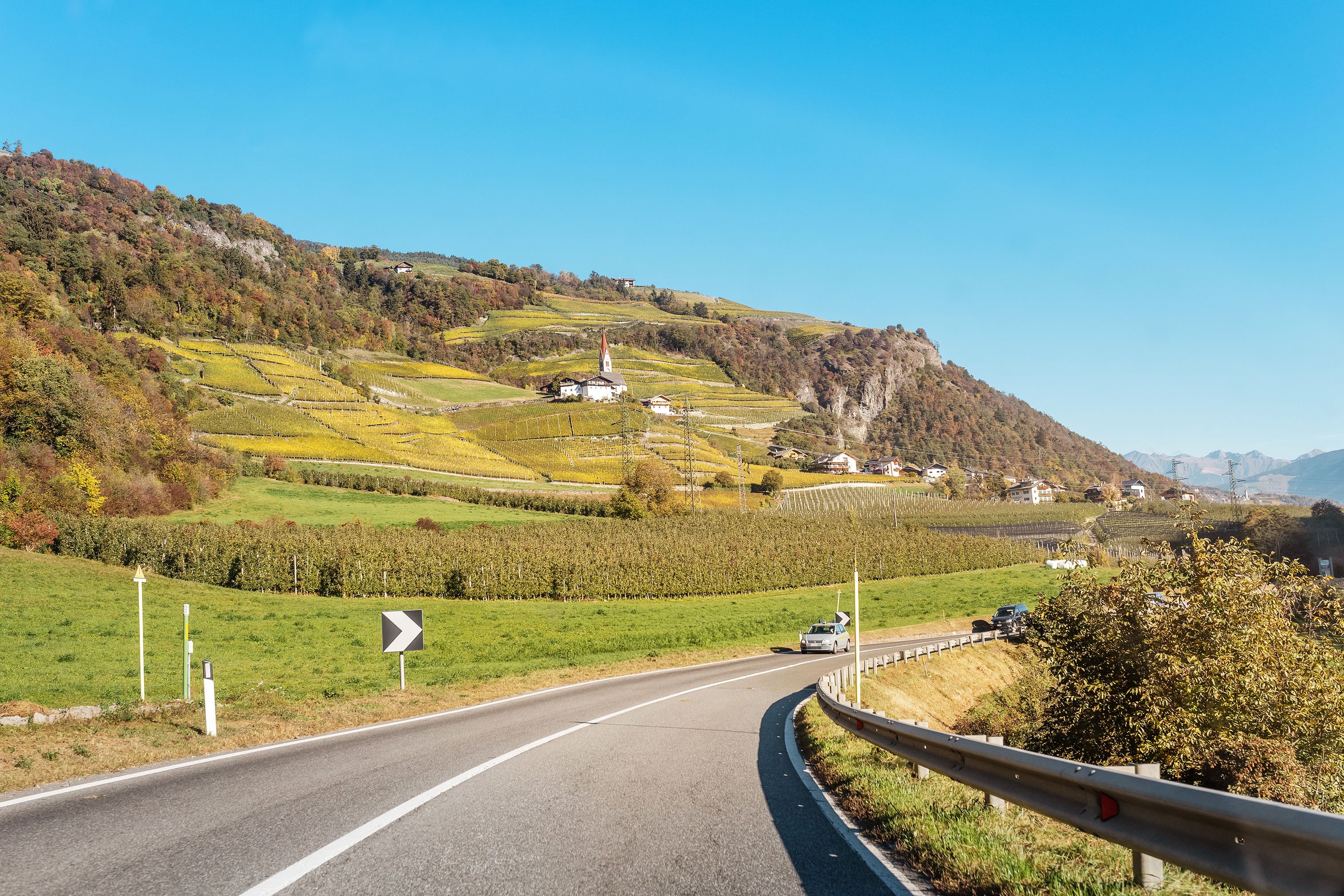
The Autonomous Province of Bolzano – South Tyrol is a public authority responsible for the planning, operation, and maintenance of the road infrastructure across the Alto Adige region.
Through its Department of Roads and Infrastructure, the Province manages more than 2,000 kilometers of public roads, ranging from high-traffic arterial routes to low-volume mountain roads. The department is responsible for ensuring road safety, serviceability, and accessibility in a geographically complex area characterized by alpine terrain, harsh winters, and strong seasonal variability in traffic demand.
The Challenge
Before adopting NIRA Dynamics’ solution, the Department of Roads and Infrastructure faced significant challenges in obtaining up-to-date and comprehensive information on road condition across the entire network. Road condition data was mainly collected through periodic measurement campaigns and inspections, which were costly, time-consuming, and not consistently available for all road segments. As a result, decision-making was often based on partial or outdated information, making it difficult to compare conditions across different operational areas.
This lack of complete and homogeneous data limited the department’s ability to objectively assess network-wide road condition, identify critical sections, and prioritize maintenance interventions. In particular, it made budget allocation and the refinement of maintenance strategies more complex, as decisions could not always be supported by consistent, network-wide data.
The Solution
To address these challenges, the Department of Roads and Infrastructure adopted NIRA Dynamics’ Road Health solution. The solution was identified as a way to complement existing measurement campaigns by providing continuous, updated road roughness data across the entire road network. NIRA’s approach made it possible to collect reliable road condition information without the need for dedicated survey vehicles or disruptive measurement campaigns.
By using NIRA Dynamics’ data, the department gained access to consistent and comparable roughness measurements for all roads, regardless of traffic volume or location. This enabled direct comparisons between different operational areas and road categories. The availability of homogeneous data across the whole network made it possible to systematically identify critical road sections and better understand overall network condition, supporting more informed planning and decision-making processes.
The Results
With the introduction of NIRA Dynamics’ Road Health data, the Department of Roads and Infrastructure was able to establish a maintenance planning and budget allocation process fully supported by data. Decisions are now based on consistent and reliable information covering the entire road network, rather than on fragmented measurements.
The key benefit of this approach is the ability to evaluate road condition objectively across all areas and road types, ensuring that no parts of the network are overlooked. Maintenance priorities can be defined more transparently, and resources can be allocated where they are most needed. Over time, this data-driven methodology supports more efficient use of public funds, improved planning of maintenance activities, and a clearer long-term strategy for managing road infrastructure in a complex alpine environment.
Interested in learning more about NIRA's Road Health solution? Click here.